Why are my Molybdenum Electrodes Failing Above the Glass Line?
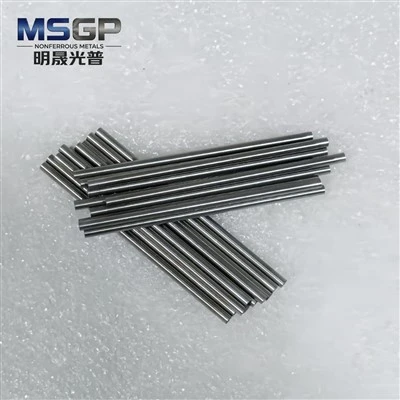
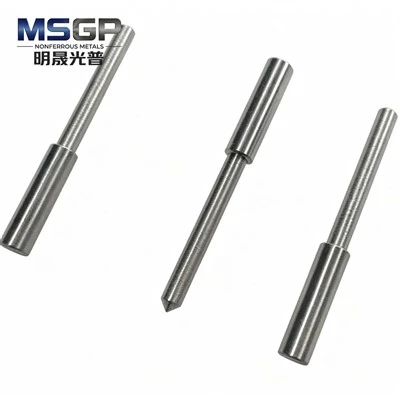
Molybdenum electrodes are typically long lasting if kept below the glass line. However they will fail at the top of the melt. Once the temperature above 400°C Molybdenum will start to oxidise. This will create a Volatile Oxide. This will cause erosion to the surface of the electrode. Many times failures to Molybdenum of low quality grade are down to the oxidation of glass line, hot joint or glass chemistry. We have detailed the mechanism of failure, how to overcome this and best practice to ensure your electrodes will last 1 or 3 years.
Oxidation Mechanism
Aluminium and stainless steels are resistant to high temperatures as a hard dense oxide layer is created that reduces the oxidation. Molybdenum will create a Volatile Oxide once heated above ~400°C in an oxygen rich environments. The oxide created will have a melting temperature of ~795°C and will become gaseous at ~1155°C. This means the oxide will be in a gaseous/liquid state at all times along the electrode shank.
As the protective oxide layer will reduce the Volatile Oxide will not reduce. As fresh Molybdenum will always be exposed the failure will be fairly linear. The hotter the temperature the worse the erosion will be. If the temperature doubles the erosion can increase by a factor of 10. Increasing the airflow will cause more erosion. As the Volatile Oxide is removed the oxygen partial pressure will remain high. If there is an airflow through an open peep hole close to the electrode this can cause more damage.
Under the glass line this will not happen. The Molybdenum will be protected by the melt. The reduction in oxygen activity at the interface means Molybdenum can survive at 1400°C glass for many years.
Best Practice
A lot of electrode life is lost through how the furnace is operated rather than through the grade of molybdenum chosen. Keeping the level under control will help. Even if the level fluctuates slightly (a few cm) the hottest part of the electrode will get wet and dry multiple times. Monitor each electrode. If you notice voltage increasing across an electrode with constant current this means the contact area has reduced. This will be the first sign of necking. Set alarms for coolant flow and temperature. Partially blocked holders will run hot.
Keeping records. Keeping records of the current, voltage, immersion and fluctuations for each electrode will help plan electrode changes. If the electrode does fail you will know why. Whether it is due to oxidation of the line, joint or glass attack. From here you can decide if you need to change the diameter, grade or same part but with better level control. Most plants who do this will not have the same reason for changing their electrodes twice.
Failed Electrode
The most informative document your glass plant will produce is a failed electrode. Usually these get thrown away. Take a picture with a scale.
If it is failing cleanly just above the glass line with a smaller diameter and round edge this is due to oxidation. If there is a waist/hourglass effect halfway down the immersion this is due to glass attack. You will also be able to see which part of the melt is causing the most aggressive erosion. If the thread is scaled/galled/flat this is due to the holder. If there are long cracks coming from the wall this means it is mechanically locked in. This is often due to the glass freezing in the annulus. If there are bubbles or brown glass pulled near the electrode this could be due to oxidation getting into the melt or purity issues with the batch.
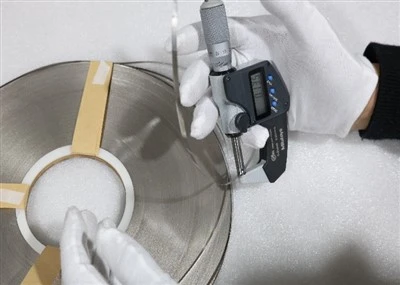
Measure the diameter of the neck and compare to the original. This will show how much erosion is happening per campaign. This will be useful going forward to next spec. Instead of saying it wore out you can see exactly how much it is wearing in mm per thousand hours.
When Molybdenum isn't the best choice
Whilst Molybdenum is the default choice for electric melting, in Lead Crystal, High Lead Glasses and highly oxidising melts Tin Oxide electrodes are usually the best choice. They are happy to take the increased resistivity and brittleness. In Optical and High Purity specialist melts Platinum can sometimes be justified. For aggressive refining chemistries Zirconia Dispersions are required.
It is very important to consider the glass chemistry, atmosphere, current density and campaign length. If you don't choose the correct grade you will pay. Over specifying will mean you are wasting money on every electrode. Under specifying will mean your electrodes will fail half way through the campaign and you will lose a weeks production. If you're unsure what grade your furnace requires the quickest way is to let us know what glass chemistry you have, what refining agents you use and what current you have per electrode. Ensure the specs match the failure history of previous electrodes. See our Molybdenum Electrodes for Glass Melting Furnaces for sizing, threading and standard grades.
NAME
Ava