Industry Frontier Observation: Casting or Forging?

Deciphering the forming watershed between refractory and non-ferrous metals such as titanium, molybdenum, tungsten, In high-tech fields such as modern, nuclear energy equipment, semiconductor manufacturing, and extreme chemicals, non-ferrous and refractory metals such as titanium, nickel, zirconium, tungsten, molybdenum, tantalum, and niobium play an irreplaceable role. However, for material engineers, the first core test question before the design drawings is often not "what material to use", but "whether to choose Casting (Casting) or Forging (Forging)".
These two completely different molding processes show completely different physical logic and industrial boundaries when facing these high melting point and high chemical activity metals.
I. The physical limit of casting: Why do refractory metals "say no" to casting?
In conventional industries, casting is favored for its ability to dispose of complex shapes. However, when facing refractory metals such as tungsten (melting point 3422 ℃), molybdenum (melting point 2623 ℃), tantalum and niobium, casting is almost powerless.
Extreme high temperature and energy consumption barriers: Such a high melting point exceeds the endurance limit of most conventional refractory crucibles, which can easily lead to the melting of crucible materials and seriously pollute molten metal.
Severe chemical activity and gettability: Titanium, zirconium, niobium and other metals are extremely sensitive to oxygen, nitrogen, and carbon in high temperature liquid state. A small amount of gas intrusion will lead to serious grain boundary embrittlement, pinholes and cracks in castings.
Casting micro-structure defects: Refractory metals are prone to form dendritic structures and thermal shrinkage holes during solidification, which will instantly evolve into the "Achilles' heel" of structural failure in the face of extreme thermal shock and high stress alternation.
Therefore, for pure refractory metals and high-purity alloys such as tungsten, molybdenum, tantalum, and niobium, the industry usually bypasses investment casting and uses Powder Metallurgy (Powder Metallurgy) sintering or electron beam/vacuum arc smelting (EB/VAR) to make ingots or large billets, and then endow them with performance through subsequent hot processing.
II. Forging and plastic deformation: the "ultimate way" to reshape micro-structure and creep resistance
In contrast, hot forging, free forging, die forging and multi-directional deformation are the core means to endow titanium, nickel, zirconium and refractory metals with excellent mechanical properties.
| Process Dimension | Casting | Forging & Deformation |
| Typically Suitable for Metal | Nickel-based superalloys, some industrial titanium alloys (such as complex castings) | Titanium alloys, zirconium alloys, high-purity molybdenum, tungsten, tantalum, niobium and TZM alloys |
| Micro-structure | Loose, the grain is relatively small, there are casting shrinkage holes and uneven directivity | As-cast dendrite completely broken, the grain is highly refined, and the fiber structure is continuous |
| Mechanical Properties | The tensile strength and elongation are relatively low, the limited density of fatigue life | Density close to the theoretical limit, and the tensile strength, creep resistance and fatigue resistance are excellent |
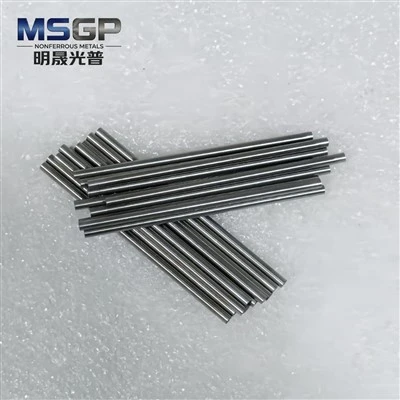
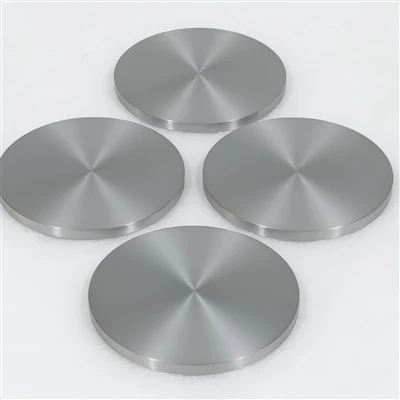
| Excellent shape adaptability | Can form complex inner cavity and integrated complex contour | Suitable for the production of bars, plates, pipes, cakes and forged structural parts, requires subsequent machining |
| Core challenges | High temperature oxidation, gas pollution, shrinkage and component segregation | High temperature deformation resistance, narrow processing window, high cracking |
Through multi-directional hot forging and high vacuum stress relief annealing, the original as-cast grains in the metal can be completely crushed, and the dynamic recrystallization can occur, forming a dense, uniform and continuous fibrous structure. Taking zirconium alloys and nickel-based corrosion-resistant alloys as examples, the stress corrosion cracking resistance and high-temperature creep life of components forged with large deformation have been doubled.
III. Future Outlook of the Industry:
Integration and Vertical Evolution of Molding Process Judging from the current trend of global advanced manufacturing, the forming of special metals such as titanium, nickel, zirconium, tungsten, molybdenum, tantalum, and niobium is breaking a single boundary.
On the one hand, digital molding technologies such as electron beam selective melting (EBSM) and laser additive manufacturing (3D printing) are emerging in response to complex shapes and small batch customization requirements, partially replacing the limitations of casting.
On the other hand, for core components that withstand extreme thermal fields and strong loads, "powder metallurgy preforming precision hot die forging multi-axis CNC final processing" is still the golden rule to ensure high reliability and zero-defect delivery of products. A deep understanding and control of the underlying laws of casting and forging will empower the next generation of extreme industries and engineering to leap forward.