Mechanical Properties of Titanium: A Hardcore Transcript from 280MPa to 1500MPa

Today we talk about a more hard-core topic: the mechanical properties of titanium. In layman's terms, it is the various indicators that titanium shows when it is stressed-can it be pulled? Can it crush? Shock resistant? How long can it last if there is a crack? Will it be in high temperature? Will it become brittle at low temperature?
These figures are not just test reports in the laboratory, they directly determine whether titanium can be used to build aircraft landing gear, rocket cryogenic storage tank, and can withstand 600 degrees Celsius in the engine.
1. Tensile strength: from pure titanium 280MPa to titanium alloy 1500MPa
The tensile strength of pure titanium is 265 ~ 353MPa, which is similar to that of ordinary aluminum alloy. But once alloy elements such as aluminum, vanadium, molybdenum, and tin are added, the strength soars. The tensile strength of general titanium alloys is 686-1176MPa, while that of β-type titanium alloys strengthened by solution and aging can reach 1760MPa at present.
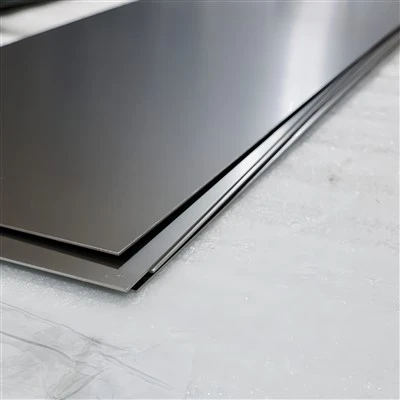
Taking the plate as an example (GB/T 3621): the tensile strength of industrial pure titanium TA0 is 280-420MPa, TA1 is 370-530MPa, TA2 is 440-620MPa, and TA3 is 540-720MPa. After adding alloying elements, TA5 (Ti-4Al-0.005B) reached 685MPa, TA7 (Ti-5Al-2.5 Sn) reached 735-930MPa, and the most classic TC4 (Ti-6Al-4V) sheet was annealed at 895MPa.
The power of alloying can be better seen from the data of the bar standard (GB/T 2965-1996): the tensile strength of TB2 (Ti-5Mo-5V-8Cr-3Al) in the quenching and aging state is as high as 1370MPa, and the specified residual elongation stress is 1100MPa. The tensile strength of TC11 bar is 1030MPa, and TC12 reaches 1150MPa.
High strength is not the only pursuit, specific strength (strength divided by density) is the killer feature of titanium. The specific strength of titanium alloy is much better than that of steel and aluminum alloy-this is also the fundamental reason for selecting titanium. Taking TC4 as an example, the density is 4.43 g/cm ³, the annealing tensile resistance is about 900 MPa, and the specific strength is about 203 MPa m ³/kg, while the specific strength of high-strength steel is about 50, and that of aluminum alloy is about 150.
Research in 2025 continues to refresh the strength ceiling of titanium alloys. According to a 2025 report by "Journal of Sichuan University", the average yield strength of TC11 titanium alloy additively manufactured by laser fuse in deposition state is 1415MPa, and the tensile strength is 1527MPa. Although the elongation rate is only 6.95%, the strength has far exceeded the forged standard value.
2. Compression, shear and pressure bearing: "all-round load bearing" of titanium
The mechanical properties of titanium have an interesting feature: it behaves very evenly under different forces.
Compressive strength: The compressive strength of titanium and titanium alloys is not lower than its tensile strength. The compressive yield strength and tensile yield strength of industrial pure titanium are approximately equal. The compressive strength of TC4 and TA7 is even slightly higher than the tensile strength. This means that titanium components are equally reliable under pressure conditions and are suitable for supporting columns, bearing housings and landing gear cushioning pillars. Shear strength: generally 60% ~ 70% of tensile strength. For TC4, about 540 ~ 630MPa. The shear modulus of titanium alloy is 43 ~ 51GPa, and that of industrial pure titanium is 46GPa. Bolts, rivets and transmission joints are mainly shear, and this parameter is the core basis for design.
Yield strength under pressure: The yield strength under pressure of titanium and titanium alloy sheets can reach 1.2 ~ 2.0 times of the tensile strength. This is because in the state of compressive stress, the material is subject to lateral constraints, and plastic instability is not easy to occur. For aircraft skin riveting and fastening connections, this means that titanium alloy plates can withstand much greater local compressive stresses than when simply tensile.
3. Endurance strength and fatigue: the test of long-term stress
Static strength only answers "whether it can be pulled off", and engineering practice is more concerned about "how long it can be used".
Endurance strength: Under normal atmosphere, the endurance strength of titanium and titanium alloys after processing and annealing is about 0.5 ~ 0.65 times of the tensile strength. The high temperature performance table shows that the tensile strength of TC4 bar at 400 °C is 620MPa, and the endurance strength of 100 hours is 570MPa; TC6 has a tensile resistance of 735MPa and a durable duration of 665MPa at 400 °C. Temperature is the biggest killer of endurance strength-the endurance strength of TC4 plummets to 195MPa at 500 °C.
Fatigue strength: The fatigue strength of annealed TC4 is about 0.2 times of tensile strength, i.e. about 180MPa, when the fatigue test is carried out 10-times under notched state (K = 3.9). This number may not seem high, but it is critical to the design of components (engine blades, landing gear, fuselage frames) that withstand alternating loads.
It is worth noting that titanium alloys have good notch performance. TC4 in annealed state is a kind of material with excellent toughness. When the notch concentration factor K = 25.4 mm, the ratio of notched tensile strength to non-notched tensile strength is greater than 1. This means that when there is stress concentration, TC4 shows higher tensile strength than smooth specimens, indicating that it is not good against notches and has a strong ability to resist crack initiation.
According to the 2026 research of "Journal of Welding", the high cycle fatigue strength of the 30mm thick TC4 joint welded by vacuum electron beam can reach more than 90% of the base metal, which is very important for large integral welded titanium alloy structures (such as deep submersible manned cabin, aircraft fuselage frame) is of great significance.
4. Hardness: pure titanium is very soft, titanium alloy is very hard
Hardness is an index of the material's ability to resist local indentation and wear, and titanium has a large span in this dimension.
The hardness of processed industrial pure titanium of purity grade is usually less than 120HB (Brinell hardness), and that of other industrial pure processed titanium is 200 ~ 295HB. The hardness of pure titanium castings is 200 ~ 220HB.
The hardness of titanium alloy under annealing is 32 ~ 38HRC (Rockwell C scale), which is equivalent to 298 ~ 349HB. The hardness of as-cast TA7 and TC4 is about 320 HB, and that of low gap impurity TC4 castings is about 310 HB.
Different processes have significant effects on hardness. According to the 2026 research of "Journal of Materials Heat Treatment", the hardness of laser powder bed melting (LPBF) TC4 deposited state can reach 379-417HV (Vickers hardness), and it will drop to 318-334HV after heat treatment at 800 °C, and after hot isostatic pressing at 940 °C Further, but the fracture toughness is increased from 42.5 MPa · m1/² to 83.9 MPa · m1/²-the trade-off of hardness and toughness is particularly obvious in additive manufacturing.
5. Modulus of elasticity: the stiffness is only 55% of that of iron, but it is better than the modulus of elasticity
The tensile elastic modulus of industrial pure titanium is 105 ~ 109GPa, and that of most annealed titanium alloys is 110 ~ 120GPa. The age-hardened titanium alloy has a slightly higher modulus of elasticity than the annealed titanium alloy, and the compressive modulus of elasticity is equal to or greater than the tensile modulus of elasticity.
This stiffness is about 55% of iron and 50% to 55% of steel. Although much higher than aluminum and aluminum alloys, titanium alloys are not dominant in occasions that require extremely high rigidity (precision machine tool spindles, bearings). However, the specific elastic modulus (E/ρ) of titanium alloys is comparable to that of aluminum alloys, second only to beryllium, molybdenum and some superalloys-considering that the density of titanium is only 57% of that of steel, the stiffness of titanium components of the same weight is not bad.
In engineering, the lack of stiffness of titanium is compensated by cross-section size and optimized structural design. In the field, titanium alloys usually require 10% to 20% of the cross-section thickness when replacing steel, but the total weight can still be reduced by more than 30%.
6. Impact toughness and fracture toughness: the last line of defense against fracture
The most direct way to improve the strength of titanium alloys is the content of interstitial elements (oxygen, nitrogen, carbon), but this will seriously damage the impact property and fracture toughness. The balance of strength and toughness is an eternal proposition in titanium alloy design.
According to authoritative data, the Xia notch impact strength of pure titanium in the processing industry is 15-54J/cm ², and that of cast pure titanium is 4-10J/cm ². The impact strength of annealed titanium alloy is 13 ~ 25.8 J/cm ², and the aging state is slightly lower. The impact of as-cast TA7 and TC4 is 10J/cm ² and 20 ~ 23J/cm ², respectively. The lower the oxygen content, the higher the impact value-this is why grade titanium alloys are extremely harsh on the content of interstitial elements.
Fracture toughness is an outstanding advantage of titanium alloys. Many titanium alloys have high fracture toughness, or good resistance to crack growth. The fracture toughness KIC of annealed TC4 can reach 67.7 ~ 87.0 MPa · m1/² (according to the 2026 forging process research of "Materials and Applications"). According to the research of LPBF TC4 in "Welding" in 2026, the fracture toughness can reach 80.3-83.9 MPa · m1/² after hot isostatic pressing at 940 °C, which is fully required for the service of components.
In comparison, the fracture toughness of high-strength steels with the same strength level is usually 50-80 MPa · m1/², and titanium alloys tend to perform better under the same strength, which is why titanium alloys are widely used in aircraft under the damage tolerance design concept. One of the reasons for the key structure.
7. High temperature performance: 450 °C is the "ceiling" of conventional titanium
The paper gives a clear temperature limit: general industrial titanium alloys can have useful properties at 540 °C, but they can only be used for a short time; The service temperature range is 450 ~ 480 ℃. Titanium alloys for missiles can be used at 540 °C and for a short time at 760 °C. At that time, titanium alloys for 600 °C use had been developed.
The tensile resistance of TA7 is 440MPa and the durability is 195MPa at 500 °C; TC3/TC4 has a tensile resistance of 440MPa and a durable duration of 195MPa at 500 °C. TC6 has a tensile resistance of 735MPa and a durability of 665MPa at 400 °C; TC11 has a tensile resistance of 685MPa and a durability of 590MPa at 500 °C; TC9 has a tensile resistance of 785MPa and a durability of 590MPa at 500 °C. Today, high-temperature titanium alloys have made great strides. According to industry public information, the Ti60 (Ti-5. 8Al-4.8 Sn-2.0 Zr-1.0 Mo-0.35Si-0.85 Nd) independently developed by my country has a service temperature of 600 °C and a tensile strength of 500 °C ≥ 735MPa; The service temperature of Ti65 can reach 650 °C, and it has been used in the high-pressure compressor disk and integral blisk of the new generation of engines. In 2025, the tensile strength of Ti180 (Ti-6Al-3Sn-4Zr-2Mo-0.5 Si) in solution-aging state will reach 1100-1250MPa, the high temperature strength rate at 550 °C will be ≥ 70%, and the fatigue limit will be increased by 15%-30% compared with TC4.
The TiAl intermetallic compound represents a higher temperature direction: Ti-48Al-2Cr-2Nb has a density of only 3.9 g/cm ³ and a temperature resistance of 750-900 °C. It has been used in the low-pressure turbine blades of GEGEnx and CFM LEAP engines to replace nickel-based alloys Weight reduction by 50%.
8. Low temperature performance: Titanium is still tough at-253 °C
One of titanium's most underestimated capabilities is its performance at extremely low temperatures.
With temperature, titanium and titanium alloys become stronger and less ductile-as is the case with most metals. However, titanium is unique in that many annealed titanium alloys still have sufficient ductility and fracture toughness at-195.5 °C (liquid nitrogen temperature). TA7 (Ti-5Al-2.5 Sn ELI) with low interstitial element content can be used at-252.7. d egree. C. (liquid hydrogen temperature), and the ratio of notched tensile strength to non-notched tensile strength is 0.95-1.15 at this temperature.
The elongation of TC4 can still reach 12% at-252.7 ℃. According to the 2026 "China Materials Progress" low-temperature titanium alloy review, the equiaxed structure TC4 has a yield strength of about 1500MPa and an elongation of about 18% at-253 °C; The tensile strength of TC4 was 1544.5 MPa at-253 ℃, and the elongation was 5.85%. The CT20 low-temperature titanium alloy (Ti-Al-Zr-Mo system) independently developed by my country has extended its service temperature to the liquid hydrogen temperature range (-253 °C), and has good low-temperature performance and processability.
This means a lot to Aviation industry. Liquid oxygen (-183 °C), liquid hydrogen (-253 °C) and liquid fluorine are the core propellants of rockets and space devices, and cryogenic tank materials cannot be brittle at extremely low temperatures. Steel will undergo a ductile-brittle transition at-253 °C, aluminum alloys will have insufficient strength, while titanium alloys-especially TC4 ELI and TA7 ELI-will remain ductile at liquid hydrogen temperatures. According to industry reports in 2026, the bottom of the 3.8-meter-diameter integral spinning titanium alloy box in China has been engineered, and the 3D printed titanium tank of UNIST in South Korea has passed the verification of-253 °C 0.8 MPa. Titanium is becoming a candidate material for cryogenic tanks of a new generation of heavy launch vehicles.
At-196 ℃ liquid nitrogen temperature, the strength of TC4 ELI increases from 848MPa to 1319MPa at room temperature, while the elongation is still 24.9%-the strength and plasticity are improved at the same time. This anomalous behavior is due to the coupling effect of deformation twins and multi-system slippage at low temperature.
Conclusion
The mechanical properties of titanium present a rich picture: pure titanium is soft and tough, titanium alloys are strong and tough; At high temperature, it will but still stick to 600 °C, and at low temperature, it will become stronger and still extend; The elastic modulus is not high but the specific elastic modulus is excellent, the hardness span is large but the fracture toughness is excellent.
By understanding these figures, you can understand why the C919 uses 9.3% titanium alloy, why the Struggle ball cabin chooses TC4 ELI, why the rocket tank begins to replace steel and aluminum with titanium, and why the engine blades need new high-temperature titanium alloy.
Titanium is not the hardest metal, it is not the strongest metal, and it is not the most temperature-resistant metal. But in the combination of "light, strong, tough, temperature-resistant, corrosion-resistant, and magnetic-free", its mechanical report card has no rivals so far.