In the procurement and application of nickel-based alloys, the surface treatment process often determines the final performance and service life of the material. With pure nickel sheets, the two most common delivery states are pickled surface and polished surface.
Many customers will ask: Apart from looking different, what is the deep-seated difference between them in actual industrial use?
Process principle: How are they formed?
Pickled Surface: Pickling is the "standard configuration" of nickel plates after hot rolling or annealing. Principle: Use an acidic solution (usually a mixture of nitric acid and hydrofluoric acid) to remove high-temperature oxide skins on the surface of nickel plates. Appearance: Presents an even silvery-white matte finish. It removes impurities but retains the natural texture of the metal itself, giving it a slightly frosted feel to the touch.
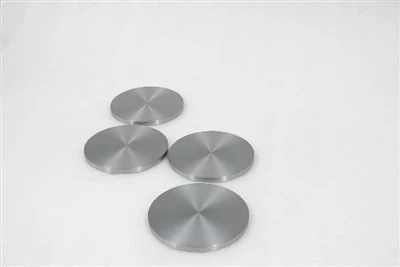
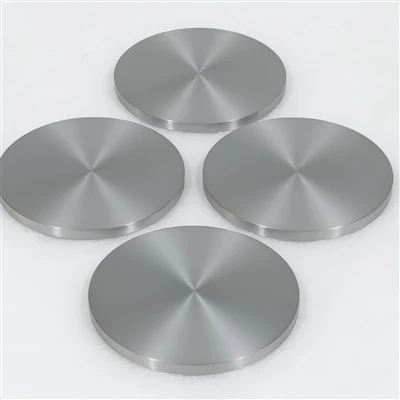
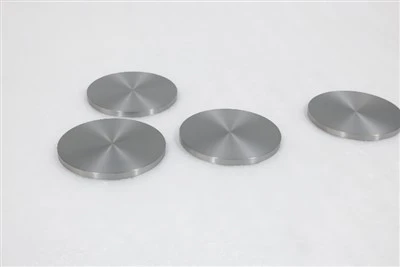
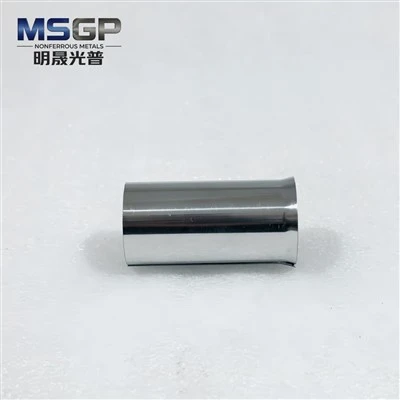
Polished surface polishing is an "upgrade process" on the basis of pickling. Principle: The surface is physically ground by mechanical polishing equipment (using abrasive belts or polishing wheels). According to different fineness, it can be divided into rough polishing, fine polishing (such as 400# and 600#); and mirror polishing (8K). Appearance: Bright, smooth, and reflective. The high-grade polished surface can shine clearly like a mirror.
Comparison of dimensions of core parameters
| Dimensionality | Pickled | Polished |
| Surfaceness | Larger, usually> 1.6 μ m | Extremely small, as low as 0.1 μ m |
| Visual effect | Matte, industrial texture | Bright surface, high-end sense, mirror effect |
| Cleaning difficulty | It is difficult to clean | Microholes are easy to hide dirt, and the surface is smooth |
| Production cost | Production cost is low (standard process) | High (additional labor and consumable costs are required) |
| Delivery | The delivery cycle is fast | Slightly slower (secondary processing is required) |
Why is surface treatment crucial to performance?
"Invisible effect" of corrosion resistance
Although pure nickel (such as N6/Ni200) itself is extremely alkali-resistant, the physical state of the surface will affect the corrosion rate.
Due to the elimination of tiny scratches and pits (stress concentration points) on the surface, the anti-pitting ability of the polished surface is usually better than that of the pickled surface in the environment of strong acid or strong alkali.
The microcosmic roughness of the pickled surface is more likely to retain chemical media, which may cause local corrosion for a long time.
Adhesion between welding and coating
If you need to spray or use a special brazing process on the surface of the nickel plate, the pickled surface has more advantages. Microscopic roughness can increase the contact area, form a better "mechanical grip," and allow the coating or solder to bond more firmly.
Outgassing rate in a vacuum environment
In semiconductor or ultra-high vacuum equipment, the polished surface is the only choice. The smooth surface can greatly reduce the adsorption of gas molecules, shorten the vacuum time, and ensure the purity of the environment.
Application scenario recommendation
The situation of choosing a pickled surface:
Large-scale chemical equipment
reaction kettle, storage tank lining, the pursuit of cost performance, and no requirements for aesthetics.
Battery industry
For pure nickel strips and connecting sheets, spot welding is required in the later stage.
Electroplating industry
Used as an electroplating nickel anode.

The case of choosing a polished surface
Pharmaceutical and food processing
Strict hygiene standards are required to prevent materials from hanging on the wall and facilitate cleaning and sterilization.
Laboratory precision instruments
need to reduce surface contamination and chemical residues.
High-end electronic products
structural parts with extremely high requirements for appearance and texture.

Contact Us
lisa
Sales Manager
Phone Number/WhatsApp
(86)-18291772322
Ta-Nb@titanmsgp.com