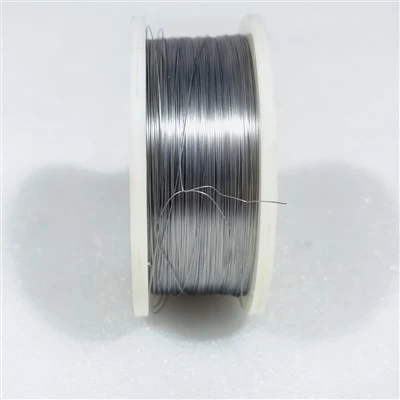
Titanium product annealing process functions
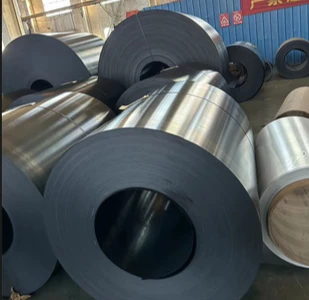
Titanium product annealing process functions (for titanium and titanium alloys, such as TA2 pure titanium, Gr5 Ti-6Al-4V, etc. annealed rods)
After titanium product such as rod, plate , tubes are rolled or drawn, they will undergo work hardening, residual stress, and microstructure distortion. Annealing is achieved through heating - holding - cooling to alter the material's microstructure and mechanical properties
Specific functions include:
Eliminating residual stress from processing
Cold drawing, rolling, straightening will leave significant internal stress within the titanium tube and plate.
If the stress is not removed, subsequent machining, cutting, and welding will be prone to deformation and warping, and the titanium tube and plate will also bend on their own during storage. However, after annealing treatment, the product will release residual stress, the dimensional stability of the rod will improve, and thus it will not deform after processing. Therefore, annealing processing of titanium rod products is crucial for welding components: the base material stress is low, reducing the tendency of welding deformation and cracking after welding.
Eliminating work hardening, improving plasticity and reducing hardness
After cold processing of titanium tubes and plates, the grains are elongated and broken, and the material becomes harder and more brittle, and the plasticity also deteriorates.
If annealing is not performed, the hardness of the titanium tube and plate will be high, the elongation will be low, and it will not be easy to bend, stretch, or be prone to cracking, and the wear of drilling and cutting tools for processing equipment will also increase;
However, after annealing, the broken grains re-crystallize to form equiaxed grains; the hardness decreases, and the elongation significantly increases, improving plasticity. From the perspective of the later welding process of the product, the annealed base material has better plasticity and toughness, and its resistance to cold cracking is better than the cold-hardened state; it is the recommended delivery state for TIG welding.
Uniform microstructure and stable material properties
The grain size of hot-rolled / cold-drawn titanium tubes and plates is not uniform. After annealing, recrystallization occurs, resulting in uniform equiaxed structure. This is mainly because after annealing, the tensile and yield properties of the titanium tube and plate throughout the entire rod are highly consistent, and the impact toughness is also improved. And as we know, Gr5 (Ti-6Al-4V) fully annealed rods are the most commonly used delivery state in marine engineering and are not suitable for direct use as pressure-bearing component materials without annealing from cold-drawn rods.
Improving subsequent welding performance
1. The annealed base material titanium tube and plate have uniform microstructure, and under the welding heat cycle, the performance fluctuations of the weld seam + heat affected zone are smaller;
2. Low residual stress, reducing the risk of cracking in the base material of the titanium tube and plate after welding;
3. Heterogeneous elements and hydrogen content can be partially released under an appropriate annealing process (vacuum annealing is particularly obvious), reducing the risk of hydrogen embrittlement, which is the failure focus of titanium marine components.
Titanium alloys must be annealed under vacuum; the surface of annealed titanium will form an oxide layer (α-case oxygen-rich embrittlement layer), and this hard and brittle layer must be removed by machining to avoid the formation of pores and cracks.
Different types of annealing
1. Stress relief annealing (low temperature): only stress relief, no complete recrystallization, the hardness decreases little. Mostly used for semi-finished products.
2. Complete recrystallization annealing (high-temperature vacuum annealing): the annealed titanium tubes and plates sold on the market are in this state, the grains recrystallize, the plasticity and toughness reach the standard requirements, and they are suitable for machine processing, etc.
• Unannealed titanium tube plates: high strength, hard, poor plasticity, high internal stress, prone to deformation, not recommended for use as pressure-bearing components.
• Annealed titanium rods: stress eliminated, excellent plasticity and toughness, uniform microstructure, stable dimensions, preferred for use in marine / ship applications, etc. after annealing.
Contact person : Tracy
Our address
Baoji city, shaanxi province ,China
Phone Number
+86-18291730106