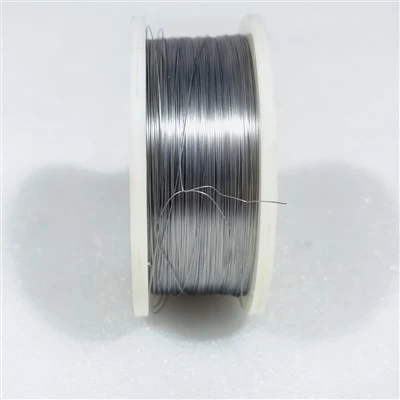
Tantalum serve as computing power metal in the AI era is being snapped up

There is a metal whose name you should not have heard of, but it has more than doubled in half a year and has become the most eye-catching product in the commodity market in 2026-tantalum.
The price of tantalum ingots was 2,600 yuan per kilogram at the beginning of the year, and it has risen to 6,150 yuan per kilogram by August. The price of tantalite has risen from about $103 a pound at the beginning of the year to about $290 a pound at the end of March, an increase of more than 180%. The cumulative increase of Jimei polymer tantalum capacitors has reached 65%, the delivery period of high-end models has been extended to 40-52 weeks, and the spot price is almost zero.
It's not hype. This is a structural supply-demand imbalance driven by supply ruptures and the explosion of AI computing power.
1. 15% of the global supply was "cut off" by a mining accident
Tantalum supply is highly concentrated.
In 2025, the total output of tantalum ore in the world will be about 2,500 tons, most of which will come from Congo (Kinshasa), Rwanda, and Nigeria. These three countries account for nearly 84%. Among them, Congo (Kinshasa) alone accounts for more than half of the world's total. Such a degree of geographical concentration is very rare among all metals.
In January and March 2026, large landslides occurred successively in the core mining area of Rubaya in eastern Congo (Kinshasa). The mine accounts for 15% of the world's tantalum raw material production, which makes the annual raw material supply about 300 tons. The new production capacity of other countries can only make up for the gap of less than 100 tons throughout the year. At worst, tantalum mining in Africa is largely manual, and many mines are controlled by armed groups. The Rubaya mining area is actually controlled by the M23 rebels, and it cannot be effectively managed. The United States and the European Union have classified products from the region as "conflict minerals".
Mines in developed areas cannot be counted on either. Tantalum in Australia is mainly extracted from lithium ore, and its grade is only about 100-400ppm. The recovery process is difficult and expensive. Tantalum in Brazil comes from tin ore companion and is also a by-product. Miners have no incentive to expand production, and there is little room for release on the supply side. The global tantalum ore supply is facing a "hard reduction" on the supply side.
In 2026, the world's tantalum mine production will drop by 16%, reaching about 2,109 tons. From 2026 to 2028, the global tantalum metal supply gap is 681 tons, 623 tons, and 580 tons respectively.
2. AI server: one cabinet swallows 5,000 tantalum capacitors
In the downstream demand structure of tantalum, tantalum capacitors account for 33%, which is the largest branch. However, AI servers are pushing tantalum capacitor usage to new heights.
On an ordinary general-purpose server, the number of tantalum capacitors used is generally between 30 and 50. Nvidia H100 servers have reached 1000-2000. The GB200 server uses 3000-5000 tantalum capacitors to stabilize the voltage. The next-generation Rubin platform uses nearly 5,000 single machines, which is equivalent to 100 times that of servers.
Why do AI servers use so many tantalum capacitors?
The high power consumption and high current work of the AI server bring high requirements to the integrity of the power supply. When the GPU is training or reasoning, the power consumption will rise rapidly from tens of watts to hundreds of watts in milliseconds. If the instantaneous load changes greatly and there are not enough energy storage capacitors to support it, the core voltage running on the GPU may collapse, causing computing power or stopping working.
The advantages of polymer tantalum capacitors in this application scenario cannot be replaced: Large capacity density, can reach more than 1000 μF The ESR value is small, only about ten milliohms, and the control is very good With an operating temperature range of-55 °C to 125 °C, it is very reliable.
Although MLCC has good high frequency performance, the capacitance value will drop significantly under DC bias; The ESR of aluminum electrolytic capacitors is too high, which will generate a lot of heat by itself. In the large-capacity energy storage scenario of artificial intelligence servers, tantalum capacitors are the only option that can take into account capacity, low ESR, and high reliability. The annual demand growth rate of polymer tantalum capacitors from customers such as Nvidia, Amazon, and Meta is greater than 20%. The world's tantalum capacitor production capacity is almost inelastic-it takes more than two years to expand the production cycle, and there is no new production capacity plan. The market share of the global market is occupied by Jimei (accounting for 51%) and AVX (accounting for about 20%-21%). Insufficient supply, long waiting times and lack of decision-making power. The lead time for high-end polymer tantalum capacitors has been extended to about 40 to 52 weeks, and there is currently no stock available for sale. There is a high probability that the out-of-stock state will be until 2027.
3. Tantalum targets: the "invisible protective net" in high-end chip manufacturing
Tantalum plays an important role in every advanced process chip.
In the wafer fabrication process below 90 nanometers, copper is widely used in interconnects due to its advantages such as low resistivity and high melting point. However, copper is directly related to silicon wafers, and diffusion will occur at high temperatures, resulting in increased leakage current and chip damage. Because tantalum has a high melting point (3017 °C), good chemical stability, and does not react with copper at high temperatures, it is the main candidate for the diffusion barrier layer between copper wires and silicon wafers.