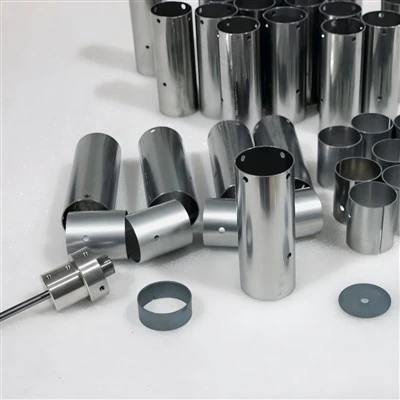
Application Advantages and Technological Points of Laser Cutting Technology in Titanium

Processing Laser cutting is one of the core processes in the field of modern precision machining. With its outstanding advantages of high power density, high precision, and high efficiency, it has become the mainstream processing of metal precision molding. This process focuses on the surface of the workpiece with a high-energy laser beam, which instantly heats up the local temperature of the material to thousands or even tens of thousands of degrees Celsius, quickly realizes metal melting, gasification and fusing, and cooperates with the coaxial high-speed airflow to blow off the molten residue to complete high-precision cutting Work. Compared with processing, laser cutting has wider adaptability and higher molding accuracy, and has irreplaceable technical advantages in the field of high-end metal material finishing.
Titanium and titanium alloy materials have the characteristics of high specific strength, light weight, corrosion resistance, good chemical stability, and excellent bio-compatibility. They are key structural materials in the fields of high-end automobiles, medical devices, and precision equipment manufacturing. However, titanium itself has high melting point, high hardness, and special thermal conductivity. When cutting, drilling, and milling processes are used, there are generally problems such as large processing resistance, high loss of consumables, rough cutting surfaces, serious thermal deformation, and low processing efficiency. Precision molding requirements in the field. The laser cutting technology perfectly adapts to the processing characteristics of titanium materials, effectively avoids process shortcomings, and has become the preferred solution for fine processing of titanium materials.
1. Technical feasibility and core advantages of laser cutting of titanium materials
The high-energy instantaneous heating principle of laser cutting is highly compatible with the physical characteristics of titanium materials, providing solid technical support for high-quality processing. The energy of the laser beam is highly concentrated and the heating speed is extremely fast. It can heat the local area of the titanium material to the state of melting and gasification in a very short period of time, realize rapid cutting, and effectively solve the processing problems caused by the high melting point and high hardness of the titanium material. Under the high-temperature and high-pressure laser processing, the molten material in the titanium cutting area is thorough, the cutting section is smooth and smooth, there are no obvious burrs, and there are few hanging slag, which greatly improves the molding accuracy and surface of the work-piece, and effectively improves the cost of subsequent grinding and finishing.
At the same time, laser cutting is a non-processing process. There is no mechanical external force and no tool wear during the processing process. It can avoid problems such as deformation, scratches, and stress concentration of titanium work-pieces to the greatest extent, fully retain the excellent mechanical properties of titanium, and adapt to high-precision, High-stability high-end parts production standards.
2. Key points of key process control for titanium laser cutting
Titanium materials have a high degree of thermal processing parameters, and the processing process has a small fault tolerance range. If you want to have a stable and high-quality cutting effect, you need to focus on controlling the three core links of material thickness matching, equipment working conditions, and human operation.
(1) Accurate matching of process parameters according to the thickness of titanium materials
The thickness of titanium plate directly determines the adaptation standards of laser power, spot size, and cutting speed, and is the basis for controlling finished products. When processing thick titanium plates, it is necessary to match high laser power to ensure the penetration of the beam, realize complete cutting, and eliminate defects such as impenetrable cutting and slag accumulation; When processing thin-gauge titanium plates, it is necessary to accurately reduce the power, optimize the size of the spot, balance the cutting speed, avoid problems such as burning through the plate, edge melting, deformation and discoloration caused by excessive energy, and ensure that the cut surface is uniform and regular.
(2) Guarantee the power and operation stability of laser equipment
Titanium cutting requires higher equipment performance. Stable and sufficient laser power and equipment operation accuracy are the core guarantees for high-quality processing. Processing equipment needs to have sufficient power reserves, and the energy requirements for high-temperature fusing of titanium materials; At the same time, the optical path and transmission system of the equipment need high precision and high stability to avoid beam deviation and speed fluctuation during processing. Stable equipment working conditions can not only ensure the consistent cutting accuracy and quality of each workpiece, but also support long-term continuous mass production, effectively improving the overall processing capacity.
(3) Strictly control the professional technology level of operators
Titanium laser cutting is a fine process processing, which requires extremely high requirements for parameter debugging, equipment control, and process control. Operators need to be proficient in the operation of laser cutting machine equipment and daily maintenance specifications, familiar with the thermal processing characteristics of titanium materials, and be able to accurately debug core parameters such as laser power, spot, cutting speed, and air pressure according to the thickness of the plate and product process requirements. Through standardized and refined human control, process defects are avoided, and product cutting accuracy and processing efficiency are stably guaranteed.
3. Technical Summary and Application Prospects
As an advanced technology for high-end metal finishing, laser cutting perfectly solves the industry pain points of titanium processing difficulty, low precision, and high loss. It has multiple advantages of high precision, good cut surface, no mechanical stress, and high processing efficiency, and is highly in line with high-end manufacturing. The industry's demand for precise and standardized production of titanium parts. With the continuous iterative upgrading of laser equipment and the optimization of process parameters, the adaptability of laser cutting technology in the processing of titanium plates, titanium composite parts, and precision structural parts will be further improved. In the future, this process will deeply empower, medical equipment, new energy, high-end equipment manufacturing and other fields, and become the core processing technology to promote the high-end, refined and industrial application of titanium materials.