Why do 316L shafts break yet nickel-molybdenum rods last?
Last month, I went to a pesticide intermediate factory for a technical return visit. The workshop director took me to the reaction kettle, pointed to a bright and new stirring shaft and said: "Look at this shaft, which was installed in 2019. Now the surface is still like new. In the past, when I used 316L, cracks appeared in an average of two and a half years, and I lost more than 150,000 yuan when I stopped production and replaced it." I squatted down and looked carefully. There is no pitting corrosion or fatigue crack at all on the shaft body-this is the real strength performance of nickel-molybdenum rod (B-3 grade) under high concentration hydrochloric acid + organic solvent.
Let me first explain why the stirring shaft is so easy to "overturn"
The stirring shaft in the chemical reactor is not static, it has to rotate at a high speed for 24 hours, and at the same time, it is soaked in a medium of high concentration hydrochloric acid, sulfuric acid or phosphoric acid. 316L stainless steel will encounter two fatal problems at the same time under this working condition:
1. The passive film on the surface is constantly "eaten" by reducing acid, and pitting corrosion occurs locally.
2. The alternating stress caused by rotation causes these pits to rapidly form micro-cracks, which eventually lead to stress corrosion cracking (SCC) .
The result is: the shaft body suddenly broke in the kettle with a "snap", not only the product was scrapped, but also the kettle had to be dismantled to remove the slag, and the production was discontinued for 3-5 days. Many factories lose millions of spare parts and shutdowns of stirring shafts a year.
Nickel molybdenum rods are completely different. Its alloy composition (Ni ≥ 65%, Mo 26-30%, extremely low Cr) allows it to quickly form a layer of * * dense and stable molybdenum oxide film * * in reducing acids, keeping chloride ions and hydrogen ions firmly out. According to the tracking data of actual working conditions, under the boiling 37% hydrochloric acid organic solvent, the corrosion rate can be stably controlled at 0.05-0.08 mm/year-this is no longer "corrosion resistance", but close to "immunity".
More importantly, its high-temperature strength and elongation (elongation is still ≥ 40% at 400-600 °C) greatly improve the fatigue resistance of the shaft when rotating, and will not rapidly expand into cracks just because of a small corrosion pit. Simply put, it holds down the two killers of "corrosion fatigue" at the same time.
It's used like this in real projects
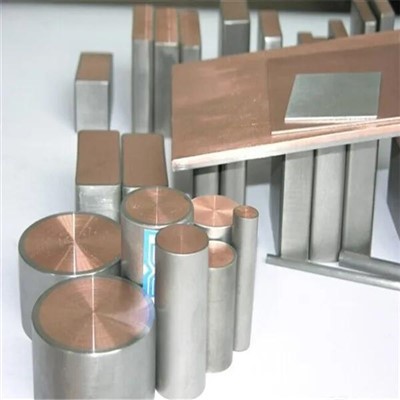
-Pesticide/dye reaction kettle stirring shaft: The medium is concentrated hydrochloric acid chloride organic matter. In the past, the 316L shaft was replaced in an average of 28 months, but now it is replaced with nickel-molybdenum rods with a diameter of 60-80mm. Some manufacturers have run for 6 consecutive years without replacement.
-Phosphoric acid concentrator pump shaft: high-temperature and high-concentration phosphoric acid, ordinary stainless steel leaks in three months, nickel-molybdenum rods directly stretch the maintenance cycle to more than two years.
-Hydrochloric acid delivery pump shaft in chlor-alkali plant: high speed and strong acid erosion, the anti-abrasion ability of nickel-molybdenum rod makes the sealing surface always in good condition, and the leakage rate is almost zero.
-High-purity reaction kettle for fine chemical industry: zero metal ion pollution is required, and the high-purity characteristics of nickel-molybdenum rods meet the needs of the production of pharmaceutical intermediates.
The most ruthless case I have ever seen: the hydrochloric acid mixing shaft of a chlorination plant had to be replaced as a whole every 8 months; After being replaced with nickel-molybdenum rods at one time in 2020, they are still operating normally until April 2026. Only two routine inspections have been done on the surface, and the saved costs have already earned back several times the material cost.
Two pits that are easy to step on when selecting materials
1. Do not mix strong oxidizers in the medium
Nickel-molybdenum rods are most afraid of high concentration of nitric acid or oxidizing media containing a large amount of Fe ³ As and Cu ² As soon as they enter, the molybdenum film will be closed, and the advantage will disappear instantly. In this case, it is recommended to go directly to C-276.
2. Professional processing and installation
Although the welding performance of the B-3 low-carbon version is very good, the stirring shaft is a precision rotating part. After machining, the surface must be pickled and passivated. The coaxiality and dynamic balance must be strictly controlled during installation, otherwise no matter how good the material is, it will not be able to withstand mechanical damage.
Finally, I would like to tell you who are reading this article
If your current new project has key parts such as stirring shaft, pump shaft, and valve stem that "can't stop moving", and the medium is high-concentration reducing acid, don't carry 316L hard. Send me the specific working conditions (medium concentration, temperature, speed, pressure), and our team will help you make a corrosion fatigue life estimate for free. In many cases, a professional material selection suggestion can help you directly save the loss of production suspension in the next 5-8 years.
Nickel-molybdenum rods have never been the cheapest rods, but it is a solution that can really make you sleep under the extreme working conditions of "turning in acid, turning in acid".
Need a quote? Need sample testing? Need machining instruction? Leave a message or contact us at any time for one-on-one chat. In chemical production, safety comes first, peace of mind comes second, and money comes third-nickel-molybdenum rods will help you get the first two things done first.
NAME
Ava