

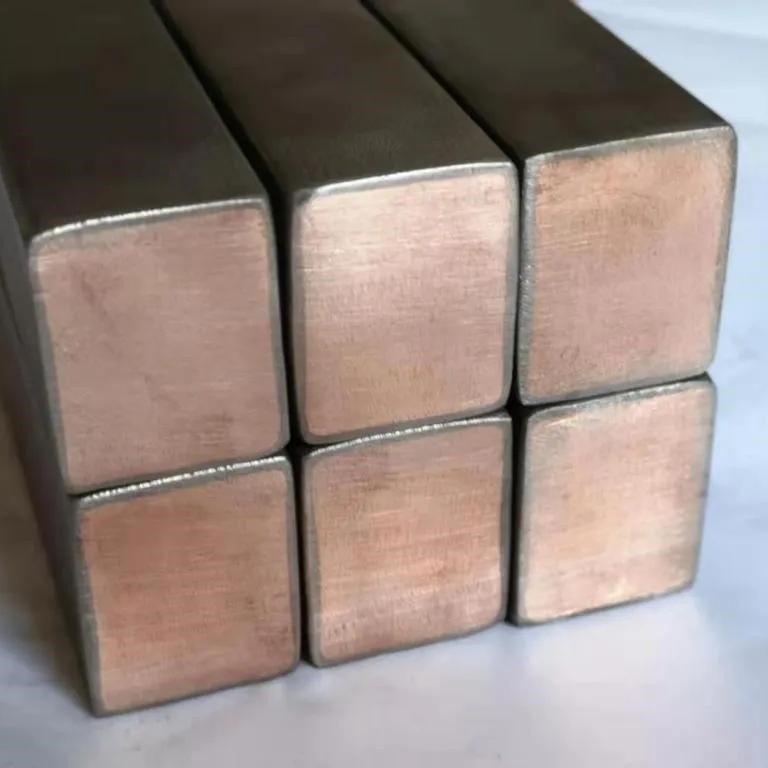
product parameters
|
Parameter Category |
Pure Titanium (Gr1/Gr2) |
Pure Copper (T2/TU1) |
Titanium Clad Copper |
|
Material Composition |
Pure titanium (≥99.5%), single material, compliant with ASTM B265 standard |
Pure copper (≥99.9%), single material, compliant with GB/T 5231 standard |
Cladding: Pure Titanium Gr1/Gr2 (ASTM B265); Core: Pure Copper T2/TU1, metallurgically bonded, no delamination |
|
Manufacturing Process |
Rolling, forging, machining, no composite process |
Rolling, extrusion, drawing, simple anti-corrosion treatment on the surface |
Explosion welding + hot rolling, molecular-level metallurgical bonding, subsequent machining refinement available |
|
Electrical Conductivity |
About 3–5% IACS, poor electrical conductivity, not suitable for high-current scenarios |
≥98% IACS, excellent electrical conductivity, suitable for high-current conduction |
≥85% IACS, close to pure copper, excellent electrical conductivity, suitable for high-current working conditions |
|
Thermal Conductivity |
15–22 W/m·K, poor thermal conductivity, weak heat dissipation performance |
380–401 W/m·K, excellent thermal conductivity, fast heat dissipation speed |
180–220 W/m·K, good thermal conductivity, meeting industrial heat dissipation needs |
|
Corrosion Resistance |
Extremely strong, resistant to acid, alkali, electrolyte, salt spray, seawater, suitable for harsh corrosive environments, not easy to oxidize |
Extremely poor, easy to oxidize, corrode, rust, cannot withstand acid/alkali/electrolyte working conditions, easy to produce patina |
Extremely strong (same as pure titanium), titanium cladding isolates corrosive media, copper core is not eroded, no oxidative loss |
|
Shear Strength |
About 240–300 MPa (bulk strength), strong shear resistance |
About 200–250 MPa (bulk strength), medium shear resistance |
≥140 MPa (bond interface strength), bulk strength is consistent with pure titanium/pure copper, no delamination risk |
|
Working Temperature |
-253°C ~ 500°C, good temperature resistance, suitable for high and low temperature extreme working conditions |
-200°C ~ 250°C, easy to oxidize at high temperature, performance degrades above 250°C |
-50°C ~ 400°C, suitable for most industrial working conditions, no performance attenuation at high temperature |
|
Cost |
Extremely high, titanium material is expensive, comprehensive procurement and processing costs are high, low cost performance |
Low, copper has high cost performance, but additional anti-corrosion treatment costs are required, and long-term maintenance costs are high |
Medium, 30–50% lower than pure titanium, lower than pure copper (including anti-corrosion treatment), no long-term maintenance costs, optimal cost performance |
|
Machinability |
Poor, high hardness, high processing difficulty and cost, not easy to bend |
Excellent, easy to cut, bend, weld, machine, low processing cost |
Good, can be cut, drilled, bent, welded, no delamination or peeling, processing difficulty is lower than pure titanium |
|
Service Life |
Long (in corrosive environment), but poor applicability in conductive scenarios, service life can reach more than 10 years in non-conductive scenarios |
Short (in corrosive environment), easy to wear, need frequent replacement, service life is usually 1–2 years |
Long (same as pure titanium), service life is increased several times in corrosive environment, up to 8–15 years, no frequent replacement required |
|
Application |
Scenarios requiring corrosion resistance but not high conductivity (such as chemical containers, seawater equipment, corrosion-resistant structural parts) |
Scenarios without corrosion and requiring high conductivity (such as ordinary wires, conductors in non-corrosive environments, civil conductive parts) |
Scenarios requiring both corrosion resistance and high conductivity (electroplating, electrolysis, hydrometallurgy, chemical conductive parts, new energy conductive structures) |
|
Surface Finish |
Pickling, polishing, machined surface, no additional anti-corrosion treatment required |
Polishing, tin plating, nickel plating (for anti-corrosion, easy to peel off), regular maintenance and re-anti-corrosion required |
Titanium surface: Pickling, polishing; Copper surface: Processed on demand, no additional anti-corrosion, no later maintenance |
|
Density |
4.51 g/cm³, relatively light weight |
8.96 g/cm³, relatively heavy weight |
5.8–6.2 g/cm³, moderate weight, easy to install and transport |
|
Certification Standard |
ASTM B265, GB/T 3620.1 |
GB/T 5231, ASTM B152 |
GB/T 12769-2003, ASTM B898, ASTM B432 |
Products Description

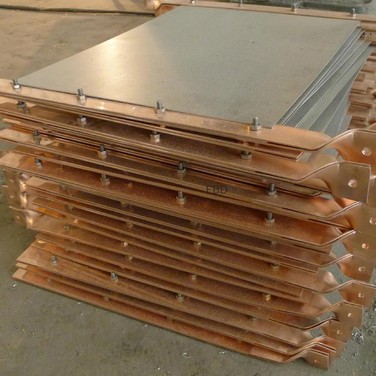
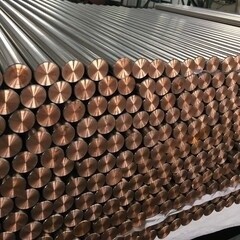

1. Balancing "Exceptional Corrosion Resistance" with "Ultra-High Conductivity"
Outer Titanium Layer: Acts as a barrier against acids, alkalis, electrolytes, chloride ions, and corrosive chemical media, offering the same level of corrosion protection as pure titanium.
Inner Copper Core: Ensures efficient conduction of high currents, low electrical resistance, and high thermal conductivity-delivering the superior conductive performance characteristic of pure copper.
Dual Functionality: Simultaneous corrosion protection and electrical conduction-combining the distinct advantages of both metals.
2. Significantly Reduced Overall Costs & Exceptional Value
Alternative to Pure Titanium Components: Titanium is an expensive material; consequently, solid titanium conductive rods or plates carry extremely high manufacturing costs. Titanium-clad copper utilizes titanium only for the surface layer while employing more affordable copper for the core, resulting in a substantial reduction in overall cost.
Alternative to Coated Copper: Conventional anti-corrosion coatings-such as electroplating or paint-applied to standard copper are prone to peeling, damage, and premature failure. In contrast, the titanium layer in titanium-clad copper is metallurgically bonded to the substrate, ensuring permanent corrosion protection.
3. High Bonding Strength: No Cracking, No Delamination, Fully Machinable
Advanced Bonding Process: Utilizing explosive bonding or hot-rolling techniques to achieve a metallurgical bond, the titanium and copper are fused together at the molecular level. This allows for cutting, drilling, bending, machining, and welding without issues such as peeling, detachment, or delamination. Its structural stability far surpasses that of components produced via simple adhesive bonding or mechanical cladding methods.
4. Reduced Equipment Wear & Extended Service Life
Enhanced Durability: Pure copper suffers from rapid corrosive degradation in environments involving electrolysis, electroplating, or hydrometallurgy, necessitating frequent replacement and maintenance shutdowns. Titanium-clad copper offers superior resistance to both corrosion and erosion, extending its service life by several orders of magnitude. This minimizes production downtime caused by component replacement and significantly reduces long-term maintenance costs.
5. Stable Electrical Resistance: Safer Operation in High-Current Environments
Reliable Conduction: The copper core features an ample cross-sectional area, ensuring stable electrical conduction, minimal heat generation, and low voltage drop. Unlike pure copper-which tends to corrode and thin out over time in corrosive environments (leading to increased resistance, overheating, and potential fire hazards)-titanium-clad copper maintains stable electrical properties, ensuring a safer environment for industrial power applications.
6. High-Temperature & Oxidation Resistance: Wider Range of Applications
Robust Performance: The titanium layer resists oxidation at high temperatures and exhibits excellent thermal stability. This makes the material suitable for a broad spectrum of applications-including electrolytic cells, chemical processing equipment, humid and saline-mist environments, and outdoor corrosive settings-in conditions where pure copper would be entirely unsuitable.
7. Optimized Weight and High Installation Adaptability
Compared to solid titanium profiles, titanium clad copper is lighter in weight, making it easier to install and handle. Furthermore, when compared to pure copper, it eliminates the need for frequent thickening to provide a corrosion allowance in corrosive environments, resulting in a lighter-weight structural design.
8. Highly Specialized and Customizable for Industry-Specific Applications
Available in various forms-including titanium clad copper rods, plates, and busbars-as well as custom-shaped components, electrode conductor rods, and busbars. Key parameters such as thickness ratios, titanium layer thickness, and copper grade (T2/TU1) can all be customized to meet the specific requirements of industries such as electroplating, metallurgy, new energy, chemical manufacturing, and environmental protection.
Contact Us
Tina
Position: Manager
E-Mail:W-Mo@titanmsgp.com
Telephone:+86 15091084744
Oil & Gas Market | Aerospace | Industrial | Construction Market
Products Forms MSGP Carries for Medical Market Applications:


Our factory & quipment


Hot Tags: titanium clad copper, China titanium clad copper manufacturers, suppliers, factory, Gr2 Titanium Sheet, Gr5 Titanium Strip, Gr7 Titanium Strip


