Why is the 0.18mm Molybdenum Wire Melting Point Key to Stable Wire EDM?
Many veteran technicians in mold factories have told me the same thing: brass wire would suddenly break after a while, causing the machine to stop for half an hour. When rushing to meet a deadline, they almost wanted to stuff the wire directly into the machine. But after switching to 0.18mm molybdenum wire, the number of wire breaks could be counted on one hand after a whole day of work. This is not luck; it's the 2623℃ melting point of molybdenum wire that provides the necessary protection. Let's talk about the most realistic situation in the industry. Wire EDM essentially relies on high-frequency pulse discharge to "burn" away a small amount of material from the workpiece. The local temperature can easily reach several thousand degrees Celsius at the moment of discharge. The melting point of ordinary brass wire is only around 900℃. It softens, stretches, and deforms easily when heated, eventually melting and breaking. The result? When the wire breaks, the program is interrupted, and the operator has to re-thread the wire, zero it, and find the break point, which takes at least 20-30 minutes. When faced with a large volume of work, downtime alone can be a significant problem.
However, 0.18mm molybdenum wire is completely different. Its melting point is a high 2623℃, nearly three times higher than brass. During actual cutting, even with intense discharge energy, the wire itself won't easily soften or melt. This directly leads to three visible changes: First, significantly extended continuous cutting time. One of our clients, a car mold maker, used to break 3-5 times per roll with brass wire. Now, using our 0.18mm molybdenum wire, a roll is almost completely unbroken, with the longest continuous operation lasting 48 hours without downtime. Second, cutting parameters can be boldly increased. Because the wire doesn't easily "break," you can appropriately increase the peak current and pulse width, naturally increasing the cutting speed. Many factories have reported that the finishing time per piece has been reduced by 15-25% after switching wires. Third, more stable surface quality. Brass wire deforms easily when heated, resulting in uneven electrical discharge (EDR) and stripes and micro-pits on the cut surface. Molybdenum wire, on the other hand, withstands high temperatures, maintaining a consistent EDR with a stable Ra value of 0.2-0.4μm, eliminating the need for a subsequent polishing step.
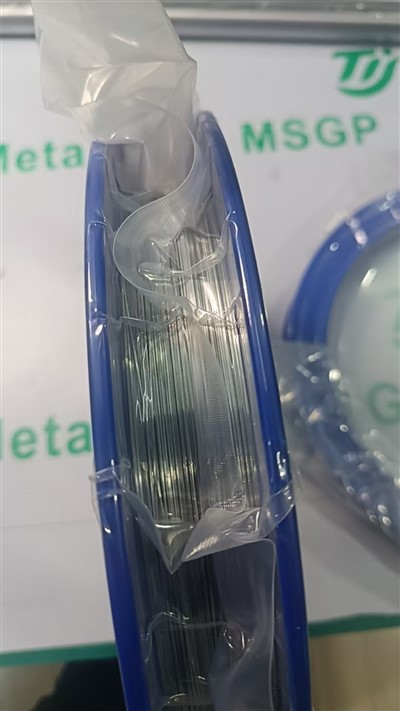
This isn't lab data; it's real-world data from over a year of testing with dozens of mold factories and aerospace parts processing workshops. The high melting point of molybdenum wire is particularly advantageous when machining difficult-to-cut materials like cemented carbide, titanium alloys, and high-temperature alloys-brass wire simply can't withstand the heat, while molybdenum wire burns steadily. Of course, a high melting point is just the beginning. We strictly control the diameter to the golden size of 0.18mm, with a tolerance of ±0.01mm, straightness ≤0.5mm/m, and tensile strength consistently above 1500MPa to truly realize this advantage. Many customers were initially skeptical during their first trial, but after testing two rolls, they cleared out their entire brass wire inventory and placed bulk orders.
If you're still struggling with persistent problems like wire breakage, downtime, and efficiency bottlenecks, consider focusing on the fundamental yet crucial aspect: melting point. 0.18mm molybdenum wire isn't just about replacing a wire; it's about elevating the stability of the entire wire EDM process by an order of magnitude. Need us to send you samples for on-site testing? Or, based on your current equipment parameters and workpiece material, can we help you select the most suitable tolerances and reel specifications? Contact us anytime. We maintain a stock of 0.18mm wire, with samples available from 10kg onwards. Test before you buy-zero risk. Factories that have actually used it understand: in high-end manufacturing, choosing the right wire capable of withstanding high temperatures is often the beginning of stabilizing production.
NAME
Ava