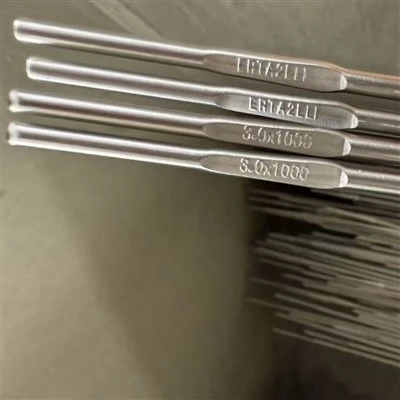
Decrypt the titanium alloy Grade 5 (Ti-6Al-4V), galloping the industrial benchmark in many fields

In many harsh scenarios such as high-end manufacturing, deep-sea engineering, and precision medicine, there is a material that has become the most widely used titanium alloy in the world due to its balanced and outstanding comprehensive performance. It is the titanium alloy Grade 5, often called Ti-6Al-4V (titanium-6 aluminum-4 vanadium). As a classic α-β titanium alloy, it combines multiple advantages such as high strength, corrosion resistance, and easy processing. It spans multiple core industries and can be called an "all-round player" in the field of titanium alloys. Today, I will take you to understand this powerful material in an all-round way.
I. Alloy foundation: gold ratio, born strong
Titanium alloy Grade 5 is a dual-phase titanium alloy made of titanium as the matrix, with a precise ratio of 5.5%-6.75% aluminum and 3.5%-4.5% vanadium. Aluminum strength-ens the matrix and improves heat resistance, and vanadium optimizes toughness and Forming ability, the dual-phase structure allows the material performance to achieve a perfect balance.
In order to ensure the purity of the material and the stability of use, its impurity composition is strictly controlled: nitrogen ≤ 0.05%, carbon ≤ 0.08%, hydrogen ≤ 0.015%, iron ≤ 0.40%, oxygen ≤ 0.20%, and the rest of the composition is titanium.
Different from ordinary pure titanium, Grade 5 can further strengthen its strength and heat resistance through professional heat treatment process, and adapt to complex working conditions from low temperature to medium and high temperature, which is also the core foundation for it to dominate the high-end material market.
II. Core performance: four major advantages to conquer harsh working conditions
The competitiveness of a material ultimately depends on the actual performance. Titanium alloy Grade 5 can easily cope with all kinds of harsh features with four hard-core features:
1. Both strength and toughness, full structural stability
Its strength is much higher than that of commercial pure titanium, while retaining excellent toughness and ductility. At room temperature, the tensile strength can reach 130 ksi, the yield strength of 0.2% is 120 ksi, and the elongation rate is 10%. Even if it bears high stress and complex alternating loads, it is not easy to deform and break. It is the material selection for load-bearing structural parts.
2. Invincible corrosion resistance, no fear of acid and alkali seawater
The surface can form a stable protective oxide film, which has strong corrosion resistance to seawater, chloride solutions, and various industrial chemicals. In marine salt spray and chemical corrosion media, the service life is far longer than that of ordinary steel and aluminum alloys, which is perfectly suitable for high corrosion operation scenarios.
3. Easy to process and weld, wide production adaptability
The alloy has excellent comprehensive processing performance and supports mainstream manufacturing processes such as mechanical cutting and cold and hot forming. At the same time, the welding performance is excellent. Conventional welding processes such as tungsten argon arc welding, melting inert gas shielded welding, and resistance welding can be used. As long as protective measures are taken, welding can be guaranteed, and production and processing are greatly difficult.
4. Balanced physical properties and strong comprehensive practicability
The room temperature density is only 4.51 g/cm ³, and the lightweight advantage is outstanding; The thermal conductivity is 7.2 W/m · ° K, the thermal coefficient is 8.6 µ m/m · °C (20 °C-100 °C), and the elastic modulus is 105-120 KN/mm ². Moderate heat conduction and characteristics make it difficult to deform during temperature fluctuations, which meets the needs of precision manufacturing.
III. Global application: four major tracks, you can see figures everywhere
With its irreplaceable comprehensive performance, Titanium Alloy Grade 5 has penetrated into four core areas, playing a key role from heavy equipment to people's livelihood medical care:
Aerospace and Aviation: The "bones and muscles" of the aircraft
It is the core application field of Ti-6Al-4V. Relying on the dual advantages of lightweight and high strength, it is widely used in aircraft engine parts, fuselage structural parts, landing gear, fasteners and other parts. While effectively reducing the overall weight and energy consumption of the aircraft, it is an indispensable core material for manufacturing to improve the structural strength and safety factor of the whole aircraft.
Ocean Engineering: The "Corrosion Guard" of the Deep Sea
In the face of perennial seawater erosion and salt spray corrosion, Grade 5 titanium alloy stands out. It is widely used in hull structural parts, marine piping, deep-sea equipment fasteners, etc. Even if it is soaked in seawater, its performance can be stable, which has become an important guarantee for the long-term service of marine equipment.
The field of energy: the "pressure pioneer" of oil and gas exploration
In the oil and natural gas exploitation industry, the downhole medium is mostly accompanied by corrosive substances and high pressure. The alloy is used to manufacture oil and gas field mining equipment, transportation pipelines, high-pressure vessels, etc., which can not only resist medium corrosion, but also withstand high-pressure impact, ensuring the stable operation of energy mining equipment.
Medical field: human-friendly "implant material"
Excellent bio-compatibility is the key to its entry into the medical field. The material is non-toxic and does not reject human tissues. Combined with excellent corrosion resistance, it is often processed into implantable medical devices such as orthopedic implants, dental instruments, and surgical precision parts to protect public health.
IV. Processing and heat treatment: professional technology, unlocking full performance
Titanium alloy Grade 5 has excellent performance, but the processing and heat treatment must follow exclusive process specifications in order to maximize the value of materials. The following are the main points of the mainstream process:
1. Machining
The thermal conductivity of the material is low, and it is recommended to use high-flow coolant during processing; Preferential selection of low cutting speed, high feed parameters, with special tools, tool wear, improve processing accuracy and efficiency.
2. Welding
Titanium has high chemical activity, and it is easy to react with air at high temperature. Welding can choose tungsten argon arc welding, melting electrode inert gas shielded welding and other processes, and take protective measures to isolate air throughout the process to avoid welding seam oxidation and defects.
3. Moulding
Support thermoforming and cold forming: thermoforming can improve material rebound and forming resistance, and improve ductility; The cold forming property is close to that of moderately tempered austenitic stainless steel, but work hardening is easy to occur during processing, and the complex cold forming process requires intermediate annealing to restore the plasticity of the material.
4. Annealing and heat treatment
• Annealing treatment: heat preservation at 732 °C for 1/4-4 hours, cooling with the furnace to 566 °C and then air cooling; Forging parts and bars can omit the furnace cold step.
• Enhanced heat treatment: The temperature of solution treatment is controlled at 904-954 °C, and water quenching after 2 hours of heat preservation can significantly improve the overall strength of the material.
Monica
Position:Sales Manager
WhatsApp: +86 182 9270 2722
E-mail: Cr-Re@titanmsgp.com