Why is it always easy to crack when a thin-walled molybdenum tube is processed?
The most common problems in the drawing process of thin-diameter and thin-walled molybdenum pipes are actually the uniformity of wall thickness and the risk of cracking. Molybdenum itself has limited plasticity at room temperature. Once the wall thickness falls below 0.5 mm and the outer diameter is only a few millimeters, machining will soon encounter troubles such as limited length, surface micro-cracks, and out-of-tolerance size. Many users who relied on imports in the early days encountered a similar situation: the pipe seemed to be qualified, and after being installed in a vacuum furnace or thermocouple sheath for a period of time, the local wall thickness deviation began to affect the temperature uniformity.
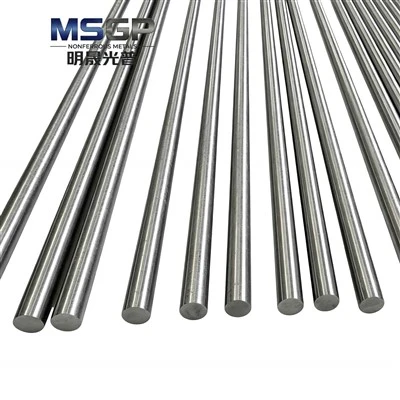
In the past two years, there has been significant progress in pressure processing technology in China. Through warm rolling and multi-pass core or hollow core drawing, combined with intermediate annealing, seamless fine-diameter and thin-walled molybdenum tubes with a minimum outer diameter of about 3 mm, a wall thickness of 0.4 mm, and a length of more than two meters have been stabilized. produced. The key is to control the amount of deformation and lubrication conditions, so that the material can complete wall reduction in the plastic temperature range, and at the same time avoid abnormal grain growth. In this way, the surface roughness of the pipe can be controlled at a lower level, and the tolerance of inner and outer diameters is also tighter, which directly reduces the workload of subsequent assembly.
The impact of this technological progress on practical applications is very direct. The thin tube support or gas introduction pipe in the thermal field of the vacuum furnace, which used to have to be welded in sections due to insufficient length or uneven wall thickness, can now be used, which not only eliminates the risk of gas leakage, but also simplifies installation. Thermocouple protection sleeves also benefit-thinner walls conduct heat faster and have shorter response times, while still providing adequate mechanical protection. And some precision pipes for weight in semiconductor equipment have also begun to replace heavier solutions with such thin-diameter and thin-walled molybdenum tubes.
Of course, thin-walled molybdenum tubes are not omnipotent. Oxidation still needs to be paid attention to at high temperatures in the air, and vacuum or inert gas is often used in actual use; For ultra-high pressure conditions, no matter how thin the wall thickness is, there is a limit. When selecting materials, the temperature, pressure requirements, and dimensional tolerances are considered together, so that its advantages can be truly exerted. If you are evaluating the feasibility of thin-diameter and thin-walled molybdenum pipes, you might as well start with the temperature and length requirements of actual working conditions. Many processing problems now have mature solutions.
NAME
Ava