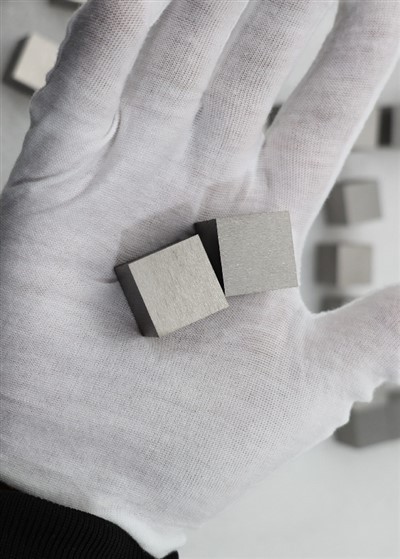
Nickel and nickel alloys are indispensable in harsh environments due to their excellent corrosion resistance and high-temperature stability. However, its welding difficulty is much greater than that of ordinary carbon steel and stainless steel. Many novices in the industry are stuck in the details. In fact, mastering the core logic can avoid many detours.

Let's first talk about the most easily overlooked pre-welding preparation. This step directly determines the success or failure of welding. There is no single step. Many people try to save trouble by skipping the cleaning step and welding directly. In the end, cracks and pores appear, and they don't know where the problem lies. The oxide layer on the surface of nickel has a very high melting point and will not melt during welding, which will directly cause inclusions in the weld. Impurities such as oil, machining lubricants, and marking crayons will bring in harmful elements such as sulfur and lead, causing thermal cracks. The correct approach is to polish the welding surface in one direction with fine sandpaper of 600 grit or more to remove the oxide layer, then wipe it thoroughly with alcohol cotton, and weld immediately after wiping to prevent the regeneration of the oxide layer; if it is a thick plate or a highly constrained structure, preheating to 100-200°C is sufficient. Ordinary nickel materials do not need to be preheated at room temperature unless the ambient temperature is too low to avoid condensation water causing pores.
Next is the choice of welding process. Commonly used ones include TIG welding, MIG welding, and arc welding. Choosing the right method in different scenarios can greatly improve efficiency and quality. TIG welding (tungsten arc welding) is the most commonly used method of nickel welding. It is especially suitable for thin parts and sealed welding. The weld bead has a beautiful appearance and few impurities. The disadvantage is that the efficiency is slightly lower. When welding, pure argon with a purity of ≥99.99% must be used for protection. The flow rate should be controlled at 10-15 L/min, and the arc length should be kept at 2-3 mm. Too long will lead to poor protection and pores. When single-sided welding and double-sided forming, the back side must also be filled with argon for protection. MIG welding is suitable for batch welding of thick parts. The wire feeding is smooth, and the arc is stable. Pure argon or argon-helium mixed gas is used as the protective gas. The interlayer temperature is strictly controlled below 150°C to prevent coarse grains and reduce the toughness of the weld.
The core points in the welding process are to control heat input and weld formation. Nickel has poor thermal conductivity, and heat is easily concentrated. Once the heat input is too large, it will cause the electrode to overheat and the weld to burn through. It will also cause the grains to become coarse, increasing the risk of thermal cracks. If the heat input is too small, there will be incomplete fusion and incomplete welding. In actual operation, it is recommended to use small line energy welding. Do not increase the current arbitrarily. Adjust it according to the diameter of the welding wire, such as 3.2 mm welding wire. The flat welding current is controlled at 85-135 A. The vertical welding and overhead welding should be appropriately reduced. The welding speed should be uniform and not procrastinating. In addition, the fluidity of the molten nickel pool is poor, so the welding gun needs to be swung appropriately, but the swing amplitude cannot exceed 3 times the diameter of the welding wire. Stop briefly on both sides to prevent undercutting. The weld should be made into a convex shape as much as possible to avoid flat welding or a concave shape to reduce the possibility of solidification cracks.
Finally, let's talk about solutions to common problems. The most common pores are mostly caused by poor protection, dampness of the welding material, or an unclean surface. The solution is to strengthen argon protection, dry the welding material before welding (dry at 200-250°C for 30-60 minutes), and thoroughly clean the base metal. Hot cracks are mostly caused by impurities brought in and improper heat input. In addition to good cleaning, nickel-based welding wire containing deoxidizing elements such as titanium and manganese must be used to offset the harmful effects of impurities. When the weld is closed, the arc crater must be filled, and if necessary, the arc crater must be polished to remove the crater to avoid the growth of cracks.
Many people think that nickel welding is difficult. In fact, it is not that the technology is complicated, but that the details are not in place. Nickel welding: seven points of preparation, three points of operation. If you are not lazy in cleaning before welding, choose the right process, control the heat input properly, and accumulate experience through many practical operations, you can weld qualified nickel welds.
Application of welding technology in our products

Nickel welded crucible

Titanium welded crucible

Tungsten welded crucible

Molybdenum welded crucible

Tantalum welded parts

Niobium welded crucible