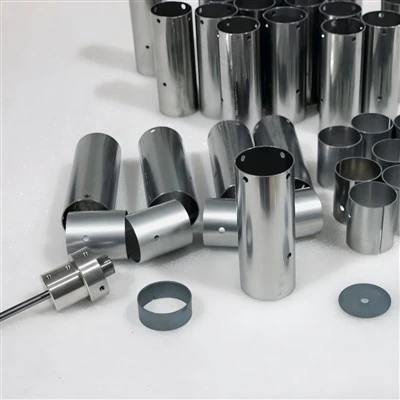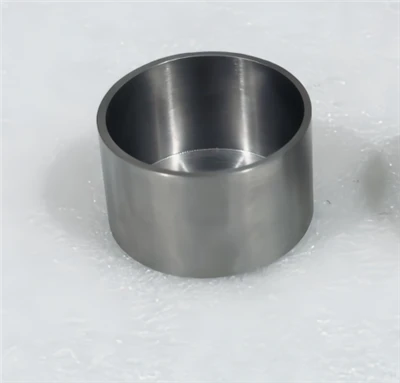
How to choose the appropriate niobium-zirconium crucible lid?
Main Functions of Crucible Covers in Experiments
-
1. The function of the cover is to effectively inhibit the volatilization of the sample under high temperature, better maintaining the proportion of chemical components. Thus, it reduces the volatilization and loss of rare earth elements, alkali metals and low-vapor-pressure precious metals under high temperature;
At the same time, the cover can increase the local vapor pressure of the crucible, reduce element volatilization, improve the accuracy of experimental data, and prevent the heating elements in the furnace from being corroded by metal vapor, thereby increasing the service life of the crucible.
-
2. Blocking melt splashing, improving experimental safety
During the heating process, when materials decompose and the melt boils, it prevents the molten sample from splashing into the furnace chamber, avoiding damage to the furnace and contamination of the furnace chamber. -
3. Maintaining uniform heat field and insulation in the crucible
Reduce heat radiation loss, the internal temperature field of the crucible is more stable, and the temperature difference between the top and bottom of the crucible is reduced, which is conducive to crystal growth and constant temperature sintering experiments. -
4. Blocking the fall of furnace internal impurities and contamination of the sample
Block the fall of insulation materials, dust, and foreign impurities into the melt, ensuring the high purity of the sample.5. Reducing the diffusion of volatile substances from the crucible itself
At high temperatures, niobium will have a small vapor pressure, and the cover can reduce the diffusion of niobium vapor to the entire vacuum chamber.
Note: The cover is generally not completely sealed and has a small gap, which is convenient for the internal gas to be discharged during the experiment to avoid internal pressure accumulation.
How to choose the appropriate niobum zirconium alloy crucible lid ?
It is recommended to use the same material for the cover (Nb cover / Nb-1Zr cover)
The crucible body is Nb-1Zr, and the cover is preferred to be Nb-1Zr; pure niobium crucible is preferred to have pure niobium cover. The thermal expansion coefficients are the same, there will be no warping, clamping, or cracking of the cover body at high temperatures, and no foreign metal impurities will be introduced, making it suitable for high-purity sample experiments.
If tungsten / molybdenum covers are selected: the sample system should be evaluated. Long-term high-temperature heating will have an element inter-diffusion risk, which is likely to contaminate the sample. Graphite covers are strictly prohibited for metals that are afraid of carbon diffusion (titanium, zirconium, rare earth, etc.); h-BN boron nitride is brittle and is prone to cracking in experiments with high thermal shock.
Structure, Size and Gap Requirements
1.The inner diameter/outer diameter of the cover needs to match the crucible opening, and it should not be completely sealed. Reserve a small exhaust gap to prevent gas accumulation, bulging, and melt splashing inside the crucible.
2. Thickness selection: too thin is prone to high-temperature deformation and warping; too thick has excessive self-weight, which may collapse the crucible opening at high temperatures. The conventional recommended thickness is 1.0–2.0mm. For extremely large crucibles, add thickness.
3. Edge treatment: round the inner and outer edges, and remove burrs to reduce stress concentration and prevent thermal shock cracking.
Environmental Usage Restrictions
The entire crucible + cover can only be used in vacuum or high-purity inert atmosphere. Above 600℃, it will come into contact with air.
Niobium/niobium-zirconium, molybdenum, tungsten will rapidly oxidize and powderize.
Surface and Cleanliness Requirements
The surface of the cover should be free of oxide spots, oil stains, and scratches. Before use, degrease, acid wash, and vacuum degas the crucible together to avoid contamination of the sample during the experiment.
Contact person: Tracy
Our address
Baoji city, shaanxi province ,China
Phone Number
+86-18291730106