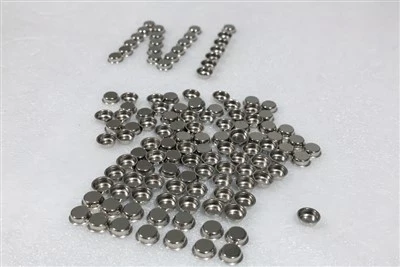
Chronicle of titanium metal for mobile phones: From screws to tens of billions of blue oceans, how can the titanium industry be reshaped by 3C?

If in the past few decades, the main battlefield of titanium metal has been chemical anti-corrosion and military ships, then starting from 2023, a "butterfly effect" from consumer electronics is quietly reshaping the pattern of the entire titanium industry chain.
Today, let's take a look at the chronicle of titanium metal used in mobile phones, and the far-reaching impact on the titanium industry behind this material revolution.
I. Chronicle of Titanium Metal for Mobile Phones: From Screw to Structural Parts
The application of titanium metal in mobile phones did not start with Apple. Looking back at history, it can be roughly divided into four stages:
1. The embryonic period (2002-2012): a niche attempt at luxury goods
● 2002: Nokia released the 8910, which pioneered the use of titanium metal casing, focusing on lightness and texture.
● 2007: British luxury mobile phone brand Vertu launched Ascent Ti, applying titanium alloy to the frame of mobile phones, establishing the "high-end" label of titanium metal.
● 2010: The domestic brand Coolpad launched the N930 and tried titanium material, but due to technology and market constraints, it failed to make waves.
● 2012: Nubia Z5 launched a titanium version, which is also a niche attempt. At this stage, titanium metal only appeared on luxury brands or concept models, which were costly and immature, and failed to form a scale effect.
2. Exploration period (2015-2022): from marketing gimmicks to technology foreshadowing
● 2015: The 8848 titanium mobile phone came out. With the unique positioning and "titanium cowhide", it left a deep impression on consumers.
● 2017: Essential Phone PH-1 built by Andy Rubin, the father of Android, pioneered the use of pure titanium (not titanium alloy) as the middle frame of the mobile phone, which is a milestone from the perspective of product design.
● 2019: Apple launched Apple Watch Ultra, introducing titanium alloy into wearable devices for the first time, accumulating a supply chain for titanium for subsequent iPhones.
● Around 2019: Apple started to try to replace steel screws with titanium alloy screws from iPhone 5; By the time of the iPhone 6, there were 44 titanium screws used on a single phone.
At this stage, titanium gradually moved from "luxury exclusive" to "technology exploration", but it has not yet become the mainstream.
3. Explosive period (2023-2024): Apple detonated, and the whole industry followed up
● September 2023: Apple released the iPhone 15 Pro series, which for the first time uses a Grade 5 titanium metal (Ti-6Al-4V) frame. The weight of the whole machine has been reduced from 206 grams to 187 grams, a weight reduction of 9.6%.
● October 2023: Xiaomi released the 14 Pro titanium special edition, which uses a 99% high-purity TA-2 titanium middle frame.
● October 2023: Honor released Magic Vs2, which uses Luban titanium hinges and applies titanium alloys to the core structural parts of folding screens.
● January 2024: Samsung released the Galaxy S24 Ultra, and the titanium alloy middle frame version accounted for 60%, setting a record for S series reservations.
● March 2024: Honor Magic6 RSR Porsche Design released, the image module and middle frame are made of titanium alloy, and the strength is increased by 150%.
● September 2024: The iPhone 16 Pro series is released, adding "desert titanium" to the original color scheme. At this stage, titanium officially moved from "niche" to "mass high-end" and became the standard configuration of flagship mobile phones.
4. Deepening period (2025-2026): from frame to hinge, fastener, from straight plate to fold
● February 2025: OPPO Find N5 is released. The hinge, wing plate and outer shaft middle frame are made of TC4 titanium alloy, and the industry's first 3D printed titanium alloy inclined plate is launched, with an unfolded thickness of less than 5 mm.
● February 2025: Mi 15 Ultra is released, using a titanium middle frame, equipped with a titanium alloy watch and earphones, building the first "lightweight titanium ecology" in the Android camp.
● September 2025: Huawei Mate XTs Extraordinary Master is released, combining ceramics and titanium alloys, and the thickness of the middle frame is controlled at 3.6 mm.
● 2026: Apple plans to release the first folding screen iPhone 18 Fold, which uses a titanium-aluminum hybrid frame, and the hinge system is made of titanium alloy and stainless steel.
● 2026: OPPO Find N2 changes 64 screws of the whole machine from the previous generation of stainless steel to titanium alloy, reducing the weight of the whole machine by about 1 gram. At this stage, the application of titanium metal extends from mobile phone frames to core structural parts such as folding screen hinges, camera modules, and fasteners, and the depth and breadth of technology are constantly expanding.
II. Titanium fasteners replace stainless steel: the neglected "invisible battlefield"
When discussing titanium for mobile phones, most people focus on the middle frame and frame, but there is a detail that is easily overlooked: titanium alloy fasteners are quietly replacing stainless steel screws.
Why do phones choose titanium screws? There are three main reasons:
1. Non-magnetic: Steel screws are magnetic. Although degaussing can be done in production, as time goes by, they will be magnetized again due to the influence of the internal electromagnetic field of the mobile phone, thereby interfering with network signals. Titanium alloy itself has no magnetism, which completely solves this problem.
2. Light weight: Mobile phones are constantly pursuing thinness and lightness. The density of titanium is about 60% of that of steel (titanium 4.5 g/cm ³ vs stainless steel 7.9 g/cm ³), which can effectively reduce the weight of structural parts.
3. High strength: Titanium screws can still have reliable locking force in a small size, which is required for precise assembly of mobile phones. The yield ratio of titanium alloys is higher than that of most steel materials, and it is more difficult to undergo plastic deformation under overload, so the safety of titanium alloys is higher.
Apple leads, the whole industry follows
Taking Apple as an example, starting from the iPhone 5, it tried to replace steel screws with titanium alloy screws; By the time of the iPhone 6, there were 44 titanium screws used on a single phone. OPPO Find N2 even changed the 64 screws of the whole machine from the stainless steel material of the previous generation to titanium alloy, reducing the weight of the whole machine by about 1 gram.
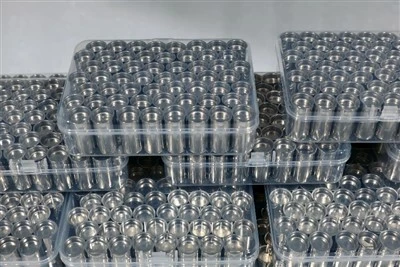
However, titanium screws are much more difficult to process than steel screws. Taking a Shenzhen supplier of Apple as an example, its production requirements are extremely stringent: if the error exceeds 0.3 mm, it will be judged as waste. By introducing high-precision grinders and optimizing fine processing technology, the company has increased the yield from the initial 60% to nearly 100%, and it took four years to stabilize mass production. The successful application of titanium screws in mobile phones not only solves the hidden danger of signal interference, but also promotes the penetration of titanium alloys from high-end fields to mass consumer electronics.
III. Analysis of the impact of each stage on the titanium industry
1. Germination stage and exploration stage: the impact is limited, but the seeds are planted.
Before 2023, titanium for mobile phones will have little impact on the titanium industry. The main flow of titanium materials is still chemical industry (accounting for about 50%), (about 20%) and other industrial fields.
But the significance of this stage is:
● Verified the feasibility of titanium metal in the field of consumer electronics, and accumulated material formula and processing technology.
● Cultivated consumers' awareness of "titanium = high-end" and laid a market foundation for subsequent large-scale applications.
2. Explosive period: 3C has become the third largest titanium field, and the restructuring of the industrial chain is accelerating
2023 is a "watershed" for the titanium industry. According to the data released by the Titanium, Zirconium and Hafnium Branch of the China Nonferrous Metals Industry Association, the compound growth rate of my country's titanium processing material production and sales will reach 15.97% and 16.51% respectively in 2023, among which the consumer electronics field has the fastest growth rate, with consumption increasing by 43.76% year-on-year.
The impact of this change on the titanium industry is far-reaching:
● Demand side: Apple's total domestic demand for titanium alloys in 2023 is about 10,000 tons. With the increase in penetration rate, it is expected that the global penetration rate of titanium alloy middle frames for mobile phones will increase from 8% in 2024 to 25% in 2025.
● Supply side: Domestic titanium companies represented by Baoji and Jiangsu companies are accelerating their deployment of consumer electronics tracks. Some companies have become key companies in the supply chain of Apple and Samsung at this stage.
● Process side: 3D printing (SLM), metal powder injection molding (MIM) and other new processes are rapidly maturing, which solves the problems of difficult titanium alloy processing and low yield. The titanium alloy hinge shaft cover of Honor Magic V2 and the 3D printed titanium alloy inclined plate of OPPO Find N5 are typical cases.
● Regional end: Baoji, Shaanxi, known as "China's Titanium Valley", is transforming from a chemical and military titanium material base to a high-end titanium material manufacturing center for consumer electronics. Some titanium companies have regarded the consumer electronics field as the "third curve" driving future growth.
3. Deepening period: folding screens detonate increments, 3D printing and new applications become new trends
The popularity of folding screen mobile phones has brought greater room for growth to the titanium industry:
● The amount of single machine has been greatly increased: the frame, hinge, support plate and other components of folding screen mobile phones require titanium alloy, and the amount of titanium used for single machine far exceeds that of bar machine. According to estimates, the amount of titanium alloy used in a folding screen mobile phone is 2-3 times that of a bar machine.
● 3D printing has become the core process: the hinge structure of the folding screen is complex, the yield rate of CNC processing is low, and the cost is high, while 3D printing can realize the one-time molding of complex structures, with less material waste and high yield rate. It is estimated that by 2027, the global folding screen mobile phone hinge market will reach 33.3 billion yuan, and the five-year CAGR from 2022 to 2027 will reach 37%.
● Fasteners replace stainless steel, opening up a new track: As the internal space of mobile phones becomes increasingly compact, titanium alloy fasteners (screws, nuts, gaskets, etc.) begin to gradually replace stainless steel fasteners. The weight of titanium alloy fasteners is only 40% of that of stainless steel, but the strength is equal to or even higher, and the corrosion resistance is excellent.
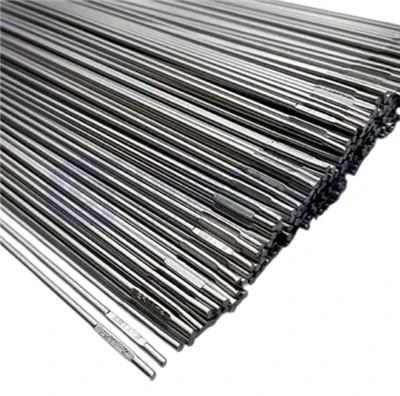
● The value of the industrial chain extends upstream: the demand for upstream materials such as titanium alloy powder and wire rod is growing rapidly. The price of some titanium alloy powder manufacturers has dropped to around 0.4 yuan/g, which further increases the terminal cost and promotes the penetration of titanium alloys from mid-to-high-end products.
IV: FUTURE PROSPECTS
1. Increased penetration rate, sinking from mid-to-high end to mid-end
At present, titanium alloys are mainly used in flagship models. With the reduction of material costs and the maturity of technology, it is expected to gradually penetrate into mid-range products in the next 2-3 years. When the price of titanium alloy powder further drops and the yield rate of MIM process increases, the thousand yuan machine is also expected to use titanium alloy middle frames.
2. Folding screen becomes the largest incremental engine
Global shipments of folding screen mobile phones are expected to grow from 20 million units in 2025 to 70 million units in 2029. The demand for titanium alloys for folding screens is several times that of bar machines, and will become the most important growth pole of the titanium industry in the next five years.
3. 3D printing and MIM process complement each other
● 3D printing: suitable for small batches of components with complex structures (such as hinge shaft covers), the advantages are high design freedom and less material waste.
● MIM: Suitable for large-scale components with relatively simple structure (such as the middle frame of a mobile phone), the advantages are low cost of large-scale production and high precision.
The two processes will complement and coexist in different scenarios, and jointly promote the popularization of titanium alloys in the field of consumer electronics.
4. Fasteners replace stainless steel, opening up a new track of tens of billions
The application of titanium alloy fasteners in high-end mobile phones is expanding rapidly. Compared with stainless steel, titanium alloy fasteners have the advantages of lightweight (60% weight reduction), high strength, corrosion resistance, and non-magnetism, and are especially suitable for flagship models that require extremely high weight and space.
As leading brands such as Apple, Samsung, and Huawei adopt titanium alloy fasteners on a large scale in flagship models, it is expected that the titanium alloy fastener market will usher in explosive growth in the next 3-5 years. According to industry estimates, if 100 million high-end mobile phones in the world use titanium alloy fasteners every year, the amount of a single machine is about 50, and each weighs about 0.1 grams, the annual demand can reach 5,000 tons, and the market size can reach billions of yuan.
5. Application scenarios extend from mobile phones to more 3C products
In addition to mobile phones, titanium alloys are extending to smart watches (Apple Watch Ultra series), laptops (Lenovo ThinkPad X1 Titanium Yoga), AR/VR headsets, drones and other fields. In the future, titanium alloys are expected to become the "standard" material for high-end 3C products.
6. Strategic Opportunities of Baoji Titanium Valley
For the domestic titanium industry cluster with Baoji as the core, the outbreak of the 3C field is both an opportunity and a challenge. The opportunity lies in opening up a new market worth tens of billions. The challenge lies in the extremely high requirements for batch stability, performance consistency, and precision processing capabilities of materials in consumer electronics, which requires companies to transform from "selling materials" to "selling solutions".
V. Conclusion
From the first attempt of Nokia 8910 in 2002, to the detonation of iPhone 15 Pro in 2023, to the full rollout of folding screens in 2026, titanium metal for mobile phones has gone through more than 20 years.
This material revolution has not only changed the design language of mobile phones, but also reshaped the pattern of the entire titanium industry. The 3C field is growing from the "marginal market" of the titanium industry to the "third pole", and the combination of folding screens, 3D printing, and titanium alloy fasteners is opening up a blue ocean of tens of billions.