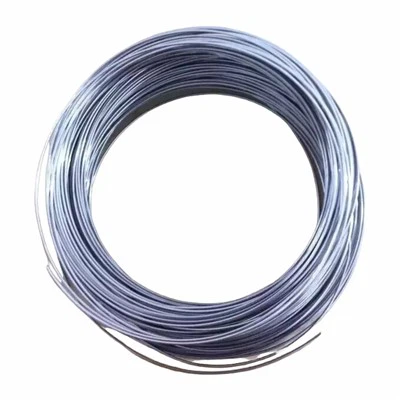
Niobium, a shiny, gray, ductile transition metal, has gained significant attention in various industries due to its unique properties. As a niobium rod supplier, I've witnessed firsthand the growing demand for this remarkable material and the curiosity surrounding how it interacts with other metals. In this blog, we'll explore the fascinating world of niobium - metal interactions and delve into the science behind them.
General Properties of Niobium Rods
Before we discuss the interactions, let's first understand the basic properties of niobium rods. Niobium has a high melting point of 2468 °C, excellent corrosion resistance, and good superconductivity at low temperatures. These properties make niobium rods highly sought - after in applications such as aerospace, electronics, and nuclear industries.
Our Nb1 Niobium Rod is a prime example of high - quality niobium products. It is carefully manufactured to meet strict industry standards, ensuring consistent performance and reliability.
Interaction with Iron and Steel
One of the most common applications of niobium rods is in the steel industry. When niobium is added to steel, it forms niobium carbides and nitrides. These compounds have a significant impact on the microstructure and properties of the steel.
Niobium carbides and nitrides act as grain refiners. During the hot - rolling process of steel, they prevent the growth of austenite grains. Smaller austenite grains lead to a finer ferrite - pearlite or bainite microstructure in the final product. This refined microstructure enhances the strength and toughness of the steel.
In addition, niobium can also improve the weldability of steel. By reducing the tendency of the heat - affected zone to form brittle microstructures during welding, niobium helps to maintain the integrity of the welded joint. This makes niobium - alloyed steel ideal for applications such as bridges, pipelines, and automotive components.
Interaction with Titanium
Niobium and titanium are both refractory metals, and they can form solid solutions. When niobium is alloyed with titanium, it can enhance the mechanical properties and corrosion resistance of the titanium alloy.
The addition of niobium can increase the strength of the titanium alloy at room and elevated temperatures. Niobium also improves the ductility of the alloy, making it more formable. In the aerospace industry, niobium - titanium alloys are used for manufacturing components such as jet engine parts and airframe structures due to their high strength - to - weight ratio and good corrosion resistance.
In terms of corrosion resistance, niobium can help passivate the titanium alloy surface. It forms a stable oxide layer that protects the alloy from corrosive environments, including seawater and acidic solutions.
Interaction with Aluminum
The interaction between niobium rods and aluminum is also of great interest. Niobium can be used as a grain refiner in aluminum alloys. When niobium is added to aluminum, it forms intermetallic compounds. These compounds act as heterogeneous nucleation sites during the solidification process of the aluminum alloy, leading to a finer grain structure.
A finer grain structure in aluminum alloys results in improved mechanical properties such as increased strength, hardness, and ductility. Moreover, niobium can enhance the thermal stability of aluminum alloys. It can prevent the growth of grains at high temperatures, which is crucial for applications where the alloy may be exposed to heat, such as in automotive engines and aerospace heat exchangers.
Interaction with Copper
Niobium rods can also interact with copper. When niobium is added to copper, it can improve the mechanical and electrical properties of the copper alloy.
In terms of mechanical properties, niobium can increase the strength of the copper alloy without significantly reducing its electrical conductivity. This is because niobium can form fine - dispersed precipitates in the copper matrix, which impede the movement of dislocations and thus strengthen the alloy.
The electrical conductivity of copper is one of its most valuable properties, especially in electrical and electronic applications. The fact that niobium can enhance the strength while maintaining good conductivity makes niobium - copper alloys suitable for applications such as high - strength electrical connectors and conductors.

Factors Affecting Niobium - Metal Interactions
Several factors can influence how niobium rods interact with other metals. The composition of the alloy, the processing method, and the heat treatment all play important roles.
The composition of the alloy determines the types and amounts of intermetallic compounds that will form. For example, the ratio of niobium to the base metal can affect the size and distribution of the niobium - containing particles, which in turn affect the properties of the alloy.
The processing method, such as casting, rolling, or forging, can also impact the microstructure and properties of the alloy. Different processing methods can result in different grain sizes and orientations, which can influence the mechanical and physical properties of the niobium - metal alloy.
Heat treatment is another crucial factor. Annealing, quenching, and tempering can change the phase structure and distribution of the alloy. For example, proper heat treatment can optimize the precipitation of niobium carbides in steel, leading to better mechanical properties.
Applications of Niobium - Metal Alloys
The unique interactions between niobium rods and other metals have led to a wide range of applications.
In the aerospace industry, niobium - titanium and niobium - steel alloys are used for manufacturing aircraft engines, airframes, and other structural components. Their high strength, lightweight, and good corrosion resistance make them ideal for these high - performance applications.
In the electronics industry, niobium - copper alloys are used for electrical connectors and conductors. Their combination of high strength and good electrical conductivity meets the requirements of modern electronic devices.
In the medical field, niobium - titanium alloys are used for orthopedic implants due to their excellent biocompatibility and mechanical properties. The ability of niobium to enhance the corrosion resistance of titanium also ensures the long - term stability of the implants.
Conclusion
As a niobium rod supplier, I'm excited about the endless possibilities that niobium - metal interactions offer. The unique properties and interactions of niobium with other metals have opened up new frontiers in various industries. Whether it's improving the strength of steel, enhancing the performance of titanium alloys, or optimizing the properties of copper and aluminum alloys, niobium plays a crucial role.
If you are interested in exploring the potential of niobium rods in your applications, we are here to help. We can provide you with high - quality niobium rods and offer technical support to ensure you get the best results. Contact us for more information and to start a procurement discussion.
References
- ASM Handbook, Volume 2: Properties and Selection: Nonferrous Alloys and Special - Purpose Materials.
- Metals Handbook Desk Edition, Third Edition.
- Research papers on niobium - metal alloys from journals such as "Acta Materialia" and "Metallurgical and Materials Transactions".