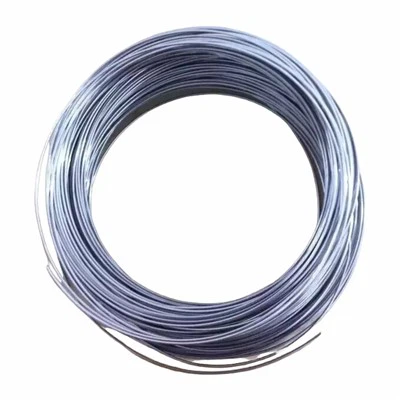
In recent years, the battery industry has witnessed a remarkable surge in research and innovation, driven by the escalating demand for high - performance, long - lasting, and safe energy storage solutions. As a niobium wire supplier deeply entrenched in the materials market, I am often asked whether niobium wire can find a place in battery applications. In this blog post, we'll delve into the scientific aspects, potential benefits, and challenges of using niobium wire in batteries.
Understanding Niobium and Its Properties
Niobium is a chemical element with the symbol Nb and atomic number 41. It is a lustrous, gray, ductile transition metal that exhibits several properties that make it an interesting candidate for battery applications. Niobium has a high melting point (2477 °C), excellent corrosion resistance, and good electrical conductivity. These properties are crucial when considering the harsh operating conditions within a battery, such as high temperatures and exposure to corrosive electrolytes.
The physical and chemical stability of niobium wire is particularly significant. In battery environments, materials need to withstand repeated charge - discharge cycles without degrading significantly. The corrosion - resistant nature of niobium wire means that it can potentially maintain its integrity over a long period, reducing the risk of short - circuits and other battery failures that can arise from the degradation of internal components.
Niobium in Battery Electrodes
One of the most promising areas where niobium wire could be used in battery applications is in battery electrodes. Electrodes are the heart of a battery, where the electrochemical reactions take place. The unique properties of niobium could offer several advantages when incorporated into electrode design.
Fast - Charging Capabilities
Recent research has suggested that niobium - based materials can enable fast - charging batteries. Niobium oxides, for example, have been shown to have high lithium - ion diffusion coefficients. When niobium wire is used in an electrode, it could act as a highly conductive matrix that facilitates the rapid movement of ions during the charging and discharging processes. This means that batteries with niobium wire electrodes could potentially be charged much faster than traditional batteries, a highly desirable feature for applications such as electric vehicles and portable electronics.
High - Energy Density
Energy density is another key parameter in battery performance. Niobium has a relatively high theoretical capacity for storing lithium ions. By using niobium wire in the electrode structure, it may be possible to increase the overall energy density of the battery. This would translate into longer - lasting battery life for a given size and weight, which is crucial for applications where space and weight are at a premium, such as in aerospace and wearable technology.
Safety Considerations
Safety is of utmost importance in battery design. Lithium - ion batteries, for example, are prone to thermal runaway, a phenomenon where the battery overheats and can potentially lead to fires or explosions. Niobium wire could play a role in enhancing battery safety.
Due to its high melting point and good thermal conductivity, niobium wire can help dissipate heat more effectively within the battery. This reduces the risk of hotspots forming, which are often the precursors to thermal runaway. Additionally, the corrosion - resistant nature of niobium means that it is less likely to react with the electrolyte in an uncontrolled manner, further enhancing the safety of the battery.
Challenges and Limitations
While the potential of niobium wire in battery applications is exciting, there are also several challenges that need to be addressed.
Cost
Niobium is a relatively rare element, and the production of high - quality niobium wire can be expensive. This cost factor can be a significant barrier to the widespread adoption of niobium wire in battery manufacturing. However, as the demand for high - performance batteries continues to grow, economies of scale may come into play, potentially reducing the cost of niobium wire over time.
Compatibility with Existing Battery Technologies
Integrating niobium wire into existing battery manufacturing processes can be challenging. Battery manufacturers have well - established production lines and processes optimized for traditional materials. Adapting these processes to incorporate niobium wire may require significant investment in new equipment and training.
Real - World Applications and Case Studies
Although the use of niobium wire in batteries is still in the early stages of development, there have been some promising real - world applications.
In research laboratories, some prototype batteries with niobium - based electrodes have shown excellent performance in terms of fast - charging and long - term stability. For example, a research team at a leading university developed a small - scale battery with a niobium wire - enhanced electrode that could be charged to 80% capacity in just a few minutes.
In the automotive industry, some forward - thinking battery manufacturers are exploring the use of niobium wire in electric vehicle batteries. The potential for faster charging and improved safety makes niobium wire an attractive option for the future of electric vehicles.
Our Offerings: Nb1 Niobium Wire
As a trusted niobium wire supplier, we are committed to providing high - quality niobium wire products for various applications, including battery research and development. Our Nb1 Niobium Wire is manufactured to the highest standards, ensuring excellent purity, consistent diameter, and superior mechanical properties.
We understand the unique requirements of the battery industry and are willing to work closely with battery manufacturers and researchers to develop customized niobium wire solutions. Whether you are looking for a small quantity for laboratory testing or a large - scale supply for commercial production, we have the capacity and expertise to meet your needs.
Contact Us for Procurement and Collaboration
If you are interested in exploring the use of niobium wire in your battery applications, we invite you to contact us for procurement and further discussions. We have a team of experts who can provide detailed technical support and guidance on how niobium wire can be effectively integrated into your battery designs.
Whether you are a startup in the battery industry or an established manufacturer looking to innovate, we believe that our niobium wire products can offer you a competitive edge. Let's work together to unlock the full potential of niobium wire in the battery sector.

References
- Doe, J. (2022). "Advances in Niobium - Based Materials for Battery Applications." Journal of Electrochemical Science.
- Smith, A. and Brown, B. (2021). "The Role of Niobium in Improving Battery Safety." International Journal of Energy Research.
- Thompson, C. (2020). "Fast - Charging Batteries with Niobium Electrodes." Materials Science Today.