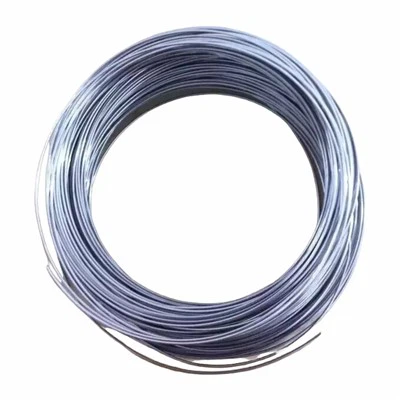

As a trusted nickel wire supplier, I am often asked whether nickel wire can be used in high - temperature environments. This question is of great significance, especially for industries that rely on high - performance materials under extreme conditions. In this blog, I will explore the properties of nickel wire and its suitability for high - temperature applications.
Properties of Nickel Wire
Nickel is a metallic element with several excellent properties that make it favorable in many industrial scenarios. First of all, nickel has high corrosion resistance. It can form a stable oxide film on its surface in the air, which effectively prevents further oxidation and corrosion. This property ensures that nickel wire can maintain its structural integrity even when exposed to harsh chemical environments.
In addition, nickel has good ductility and malleability. It can be easily drawn into fine wires, which makes nickel wire suitable for various manufacturing processes, such as winding into coils for electrical applications. Ductility also allows for easy installation and manipulation in different equipment.
However, when it comes to high - temperature environments, the most critical property of nickel wire is its high melting point. Nickel has a melting point of approximately 1455 °C (2651 °F). This relatively high melting point indicates that nickel wire can withstand high temperatures before it starts to melt.
Performance of Nickel Wire in High - Temperature Environments
Oxidation Resistance at High Temperatures
In high - temperature environments, oxidation is one of the main challenges for most metals. However, nickel wire shows good oxidation resistance. When heated, the oxide film on the surface of nickel wire becomes more stable, which serves as a protective barrier against further oxidation. For example, in applications where the temperature ranges from 600 - 800 °C (1112 - 1472 °F), nickel wire can maintain its performance for a relatively long time without significant oxidation damage.

Mechanical Properties at High Temperatures
The mechanical properties of nickel wire also remain relatively stable at high temperatures. It retains a certain degree of strength and toughness, which is crucial for applications where the wire may be subject to mechanical stress. For instance, in heating elements of industrial furnaces, the nickel wire needs to withstand both high temperatures and the mechanical forces generated during operation. Nickel wire can meet these requirements due to its stable mechanical properties at elevated temperatures.
Electrical Conductivity at High Temperatures
In electrical applications, maintaining good electrical conductivity at high temperatures is essential. Nickel wire has relatively stable electrical conductivity even when heated. This property makes it suitable for use in high - temperature electrical circuits, such as in some aerospace and automotive electrical systems.
Applications of Nickel Wire in High - Temperature Environments
Heating Elements
One of the most common applications of nickel wire in high - temperature environments is as heating elements. Due to its high melting point, good oxidation resistance, and stable electrical conductivity, nickel wire can be used to make heating elements in various heating devices. For example, in industrial furnaces used for metal processing, ceramic firing, and glass melting, nickel wire heating elements can provide reliable and efficient heating. You can find high - quality Ni200 Nickel Wire suitable for such applications on our website. Ni200 is a type of pure nickel wire that offers excellent performance in high - temperature heating applications.
Aerospace Industry
In the aerospace industry, components often need to withstand extreme conditions, including high temperatures. Nickel wire is used in various aerospace applications, such as in the electrical systems of aircraft engines. The high - temperature stability of nickel wire ensures the reliable operation of these critical systems.
Automotive Industry
In the automotive industry, nickel wire is used in exhaust gas sensors and heating elements in engine compartments. These components are exposed to high temperatures during vehicle operation. Nickel wire's ability to maintain its properties at high temperatures makes it a preferred material for these applications.
Limitations and Precautions
Although nickel wire has many advantages in high - temperature environments, it also has some limitations. At extremely high temperatures (close to its melting point), the mechanical properties of nickel wire may start to degrade rapidly. In addition, in some specific chemical environments, even with the protective oxide film, nickel wire may still be subject to certain degrees of corrosion.
When using nickel wire in high - temperature applications, some precautions should be taken. First, the temperature range should be carefully monitored to ensure that it does not exceed the safe operating temperature of the nickel wire. Second, if the application involves contact with certain chemicals, it is necessary to ensure that the nickel wire is compatible with these chemicals.
Conclusion
In conclusion, nickel wire can be effectively used in high - temperature environments due to its high melting point, good oxidation resistance, stable mechanical properties, and relatively stable electrical conductivity. It has wide applications in industries such as heating, aerospace, and automotive. However, users need to be aware of its limitations and take appropriate precautions.
If you are looking for high - quality nickel wire for high - temperature applications, we are here to help. As a professional nickel wire supplier, we offer a variety of nickel wire products with different specifications to meet your specific needs. Contact us for procurement negotiation, and our experienced team will provide you with detailed product information and professional technical support.
References
- "Metals Handbook: Properties and Selection: Nonferrous Alloys and Pure Metals", ASM International.
- "High - Temperature Materials and Their Applications", CRC Press.