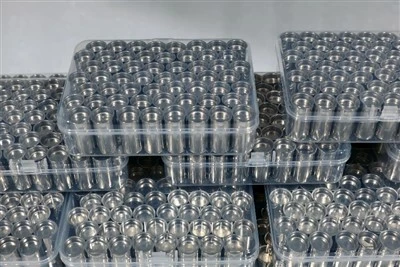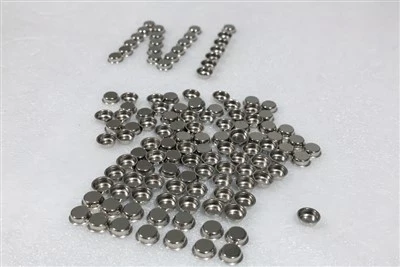
Mo1 molybdenum cup shows great potential in emerging fields.
Market Status
The global high-temperature material market continues to expand, and the demand for container equipment that can work stably in extreme high-temperature environments has shown explosive growth. The purity of Mo1 molybdenum cup is as high as 99.95%, the melting point reaches 2610 °C, and it has excellent corrosion resistance and chemical stability. It has become the preferred equipment for many high-temperature processes.
Traditional high-temperature vessel materials can no longer meet the higher requirements of emerging industries for purity, stability, and service life, which brings huge market opportunities for high-performance materials such as Mo1 molybdenum cups.
Trend 1: Third-generation semiconductors become the biggest growth engine
The rapid development of third-generation semiconductor materials such as gallium nitride (GaN) and silicon carbide (SiC) is becoming the core driving force for the growth of demand for Mo1 molybdenum cups.
Technological breakthroughs drive a surge in demand.
Third-generation semiconductors are widely used in 5G communications, new energy vehicles, rail transit, smart grids, and other fields. Their manufacturing processes put forward higher requirements for the purity and temperature resistance of container materials.
The key role of Mo1 molybdenum cup in the manufacturing of third-generation semiconductors:
Crystal growth container: used for GaN and SiC single crystal cultivation to ensure high purity and integrity of crystals
High temperature smelting equipment: provides a stable reaction environment during high temperature treatment of semiconductor materials
Sputtering system component: As a key component of the thin film deposition process, it ensures the quality of the coating
Broad market prospects
According to the forecast of industry analysts, the global GaN device market will exceed 20 billion US dollars by 2025, and the SiC market will maintain an average annual growth rate of more than 30%. A domestic semiconductor equipment manufacturer said, "In the crystal growth process of GaN and SiC, the high purity and high temperature stability of Mo1 molybdenum cups cannot be replaced by other materials. "
Trend 2: The new energy vehicle industry chain creates new demand
The vigorous development of the new energy vehicle industry has opened up a new application space for Mo1 molybdenum cups in the field of high-temperature treatment of battery materials and motor materials.
High Temperature Treatment of Power Battery Materials
With the continuous improvement of the cruising range and charging speed of electric vehicles, the production of key materials such as positive electrode materials, negative electrode materials, and electrolytes requires precise high-temperature treatment processes.
Advantages of Mo1 molybdenum cup in the manufacture of power battery materials:
High temperature stability: able to withstand high temperature environments above 1500 °C during the preparation of battery materials
Chemically inert: Avoid reacting with battery materials to ensure the purity of the final product
Long service life: reduce production costs and improve production efficiency
The technical director of a lithium battery material company introduced: "We use Mo1 molybdenum cups for high-temperature sintering of cathode materials, and their stability has significantly improved product yield and production efficiency. "
High-temperature application of motor materials
New energy vehicle motors have higher and higher requirements for magnetic materials and permanent magnet materials. Mo1 molybdenum cups ensure the high performance and stability of materials in the manufacture of motor materials.
Trend 3: The application of green energy continues to expand
In the context of global energy transformation, the field of green energy has brought new growth points to Mo1 molybdenum cups.
Growth in demand for the solar energy industry
The solar photovoltaic industry is an important application field of Mo1 molybdenum cups, especially in the production of high-efficiency batteries, which require the use of high-temperature containers for material treatment.
Application of Mo1 molybdenum cup in the solar energy industry:
Smelting of solar cell materials: used for high-temperature treatment of solar materials such as silicon materials and germanium materials
Thin film battery manufacturing: as a key component in thin film deposition processes such as CVD and PVD
High-efficiency battery research and development: providing equipment support for the material research of the next generation of high-efficiency solar cells
Opportunities brought by the development of energy storage technology
With the rapid development of energy storage technology, especially breakthroughs in new battery technologies such as sodium-ion batteries and solid-state batteries, the demand for high-temperature container equipment is also growing.
The person in charge of research and development of a new energy company said, "When we are developing new battery technology, the high temperature performance and purity of Mo1 molybdenum cups provide us with important experimental support.
Conclusion
As a key piece of equipment in high temperature industry, the Mo1 molybdenum cup is ushering in unprecedented development opportunities. Driven by the four emerging fields of third-generation semiconductors, new energy vehicles, aerospace, and green energy, the Mo1 molybdenum cup market has shown huge growth potential.
The industry generally believes that with the continuous advancement of technology and the continuous expansion of application fields, the Mo1 molybdenum cup industry will maintain a steady growth trend. For relevant enterprises, seizing this development opportunity and, through technological innovation, quality improvement, and service optimization, they are expected to stand out in the fierce market competition.
The future has come, and Mo1 molybdenum cups are standing at a new starting point for development, writing a more exciting chapter in the field of high-temperature materials.
NAME
Ava