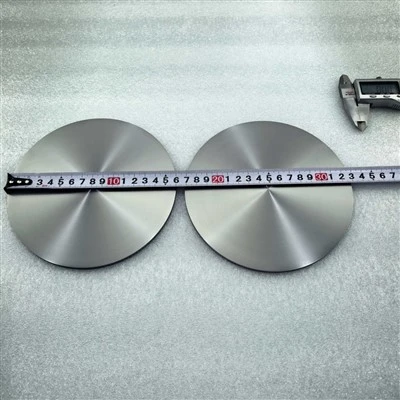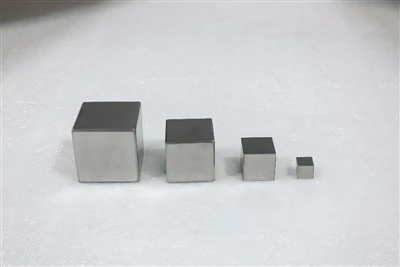
From microporous sponge to dense lattice: "metallurgical recombination" of deconstructed titanium plates and rods and high-end engineering layout

In the material pyramid of modern industry, Titanium (Titanium) is known as "space metal" and "ocean metal" because of its unparalleled specific strength and extreme corrosion resistance. However, in the field of metallurgy, the most fascinating thing about titanium lies in its past and present life: one end is Titanium Sponge, which is shaped like slag, has a loose structure and is very easy to oxidize and explode at high heat; At the other end are high-precision titanium plates and rods with dense internal lattices and cold silvery surfaces.
The evolution from "hole sponge" to "big country heavy weapon" is not only a symphony of temperature and pressure, but also an extreme process for modern metallurgical technology to precisely control metal Microstructure (Microstructure) and grain orientation.
I. Metallurgical reorganization: the "four core evolution stages" of sponge titanium transformation into plates and rods
In the supply chain at the international level, from the formation of titanium sponge to the final material (titanium plate, titanium rod), the following hard-core manufacturing closed loop must be experienced:
1. Ingot Metallurgy: "Lattice Birth" under Vacuum
Sponge titanium cannot be processed directly. First of all, titanium sponge needs to be precisely proportioned with aluminum, vanadium, molybdenum, tin and other alloy elements, and pressed into electrode blocks by high pressure. Dual-track decision for smelting (VAR vs. EB): In order to eliminate low-density inclusions (LDI) and high-density inclusions (HDI), high-quality grade or semiconductor-grade titanium ingots must undergo 2 to 3 vacuum consumable electric arc furnace (VAR) remelting. For the billet of ultra-wide titanium plate, modern industry prefers electron beam cooled bed furnace (EBCHM) melting, which can cast large flat ingots without segregation at one time.
2. Cogging The newly cast titanium ingots are filled with Columnar Grains, and the material is rigid and brittle with serious anisotropy.
The power of large forging ratio: it is necessary to pass through thousands of tons of hydraulic presses to carry out repeated lengthening and piers in multiple directions in the beta phase region or α + β two-phase region. The essence of this process is to completely break the grains through Dynamic Recrystallization (Dynamic Recrystallization) to reduce to fine, uniform Equiaxed Grains (Equiaxed Grains), which is the cornerstone of the high fatigue life of titanium rods.
3. Shunt Evolution: "Thermo-mechanical Deformation Watershed" between Titanium Plate and Titanium Rod
After high-quality billets (Billet/Slab), titanium plates and titanium rods have gone to a completely different production line:
Titanium rods (finish rolling and rotary forging): The billet is continuously rolled, drawn or rotary forged in multiple passes. Engineers must strictly control the finishing temperature to regulate the texturing control of the titanium rod to ensure that its tensile strength and yield strength are perfectly matched.
Titanium plate (Cross Rolling vs. hot rolling/cold rolling): In order to eliminate the anisotropy of the metal during one-way rolling, high-end titanium plate adopts the Cross Rolling (Cross Rolling) process (that is, rotating 90 ° after longitudinal rolling and rolling again). By accurately controlling the down-pressure ratio of hot and cold rolling, the uniformity of force on the plate in any direction is ensured.
4. Vacuum Annealing & Finishing The final titanium plates and rods need to be annealed in a high vacuum furnace to eliminate internal residual stress and prevent hydrogen embrittlement. The surface is pickled, centerless ground (for titanium rods) or polished to form a perfect surface state for final delivery.
II. Cross-border map: deciphering the cutting-edge blue ocean track controlled by titanium plates and rods
In addition to the well-known civil aviation aircraft fuselage frames and chemical heat exchangers, high-quality titanium materials are dominating the following undermentioned high-premium areas:
1. Semiconductor chips: ultra-high-purity titanium plates-electronic-grade sputtering target blanks
In semiconductor wafer fabrication, metal barriers and wafer gates of micron-scale chips are formed by PVD sputtering deposition. This requires that the purity of the titanium target used as the evaporation source should be above 99.999% (5N). Ultra-high-purity titanium plates formed by vacuum melting and super-large deformation cross-rolling usually have a microscopic grain size of less than 50um and a high degree of consistent crystal orientation, which directly determines the thickness uniformity of the film during sputtering.
2. Biomedical: Medical Titanium Rod-Implantable Orthopedic Joint and Spinal Nails (Orthopedic Implants)
In human bone repair, the selection of Ti-6Al-4V ELI (ultra-low gap element) titanium rods that meet the ASTM F136 standard is the international mainstream. The oxygen content of this titanium rod is strictly controlled within ≤ 0. 13%. Fine-grained, high-purity medical titanium rods are CNC precision machined to become human bone nails and artificial joints, which provide extreme fatigue resistance while ensuring perfect bio-compatibility and zero cytotoxicity.
3. Commercial: Titanium rod die forgings-new rocket engine disk components
With the development of reusable rockets, engine turbopumps and core Disks (Disks) need to withstand huge dynamic loads from extreme cold (liquid hydrogen/liquid oxygen) to moderate temperatures. The disk forged from high-end titanium rods through the hot die forging process has extremely high Fracture Toughness (Fracture Toughness) and is the "steel and iron bone" that supports the safe recovery of rockets.