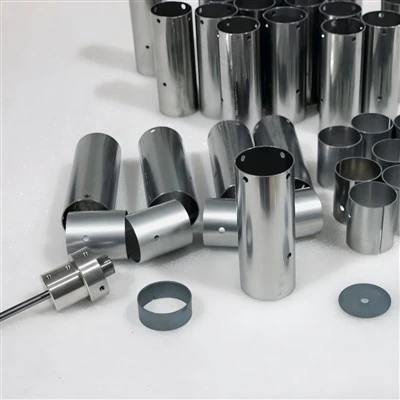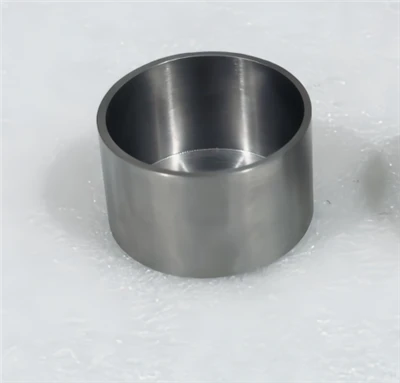
Sintered molybdenum tube is a core refractory metal component manufactured via powder metallurgy sintering technology. Starting from high-purity molybdenum powder (usually 99.95% purity), the powder is compacted and sintered under high temperature in protective hydrogen atmosphere, forming seamless tubular parts without full metal melting. This special production route gives sintered molybdenum tubes stable grain structure, excellent high-temperature mechanical performance, low thermal expansion coefficient and good thermal conductivity. With a melting point up to 2623°C, sintered molybdenum tubes maintain structural strength under vacuum or inert gas environments above 1600°C, so they are widely adopted across high-end manufacturing sectors where stainless steel, nickel alloy and common heat-resistant metals fail to survive extreme working conditions.
Many industrial buyers confuse sintered molybdenum tube with forged molybdenum tube. Sintered molybdenum tubing excels in near-net forming, suitable for thin-wall, small-batch and customized dimension requirements. Its uniform microstructure brings reliable dimensional stability during repeated heating and cooling cycles. It resists corrosion from molten glass, some molten metals and inert high-temperature gas, though users must note that molybdenum oxidizes rapidly above 500°C in air, so sintered molybdenum tubes must work in vacuum or inert protective atmosphere for long-term service. This basic property defines nearly all its commercial applications.
The largest application field for sintered molybdenum tubes is high-temperature vacuum furnaces and thermal processing equipment. They serve as furnace muffle tubes, heating shielding sleeves, carrier tubes and thermocouple protection sheaths. For W-Re thermocouple systems measuring ultra-high temperature from 1600°C to 2200°C, sealed-end sintered molybdenum tubes isolate the sensing junction from metal vapor and particle erosion, ensuring accurate temperature reading in sintering, brazing and metal heat treatment furnaces. In powder metallurgy hard alloy sintering, ceramic sintering and graphite thermal treatment, sintered molybdenum muffle tubes separate the workpiece chamber from heating elements, stabilizing atmosphere and reducing heat loss. Compared with alternative refractory materials, sintered molybdenum tubes deliver balanced heat transfer performance and long service life in continuous high-temperature runs.
Semiconductor and single crystal growth industries consume large volumes of high-purity sintered molybdenum tubes. In sapphire crystal furnaces and CZ silicon crystal growth systems, sintered molybdenum tubes work as supporting sleeves, flow channels and heat shielding components. The low thermal expansion keeps the tube shape stable during crystal pulling, preventing thermal deformation that would damage crystal quality. For ion implantation and thin film deposition equipment, sintered molybdenum tubing acts as plasma and beam transmission tubes, thanks to good electrical conductivity and low impurity release. Ultra-high purity sintered molybdenum avoids heavy metal contamination, a critical requirement for wafer manufacturing and photovoltaic crystal production.
Glass manufacturing and lighting industry also rely heavily on sintered molybdenum tubes. Molybdenum has outstanding resistance to molten glass corrosion. Sintered molybdenum tubes are fabricated as glass melting electrodes, feeding tubes and forming components in optical glass, borosilicate glass and glass fiber production. They can keep stable contact with molten glass for long cycles without polluting glass composition. In high-intensity discharge lamps, sintered molybdenum tubes are used as lead-out sleeves and internal supporting structures, matching thermal expansion with lamp materials and preventing seal failure under thermal cycling.
Aerospace, defense and energy sectors select sintered molybdenum tubes for extreme environment structural parts. They are applied as short-life high-temperature pipeline components, nozzle liners and heat transfer parts in propulsion systems, where materials need to withstand instantaneous ultra-high temperature and thermal shock. In nuclear-related test equipment, sintered molybdenum tubes are used for experimental fluid channel parts due to good radiation resistance and low neutron absorption. Some chemical high-temperature reaction systems adopt sintered molybdenum tubes as corrosion-resistant pipelines under inert atmosphere chemical reactions.
Additionally, sintered molybdenum tubes are used in medical X-ray equipment and high-temperature analytical instruments, acting as internal shielding and structural components.
When sourcing sintered molybdenum tubes, buyers need to confirm purity, wall thickness tolerance, surface finish and grain status. Surface machining, grinding and coating can further optimize oxidation resistance. Common custom options include one-end sealed tubes, precision thin-wall tubes, drilled or slotted molybdenum tubes for special furnace designs.
To sum up, sintered molybdenum tube is not a general structural pipe. It is a specialized refractory metal tubing designed for vacuum/inert atmosphere high-temperature scenarios. Its core value lies in retaining mechanical strength and dimensional stability under extreme heat, supporting crystal growth, vacuum heat treatment, glass melting and semiconductor equipment. As advanced manufacturing develops, demand for precision customized sintered molybdenum tubes continues to grow in global high-temperature material markets.
Name
Lisa
Phone Number/weChat/whatsApp
(86)-18291772322
Ta-Nb@titanmsgp.com