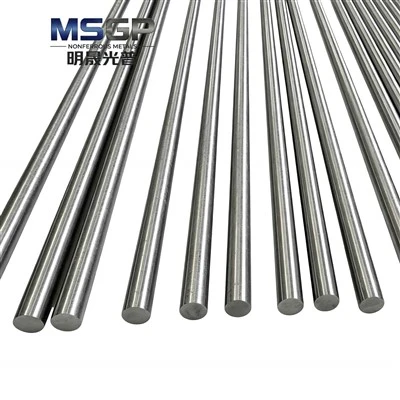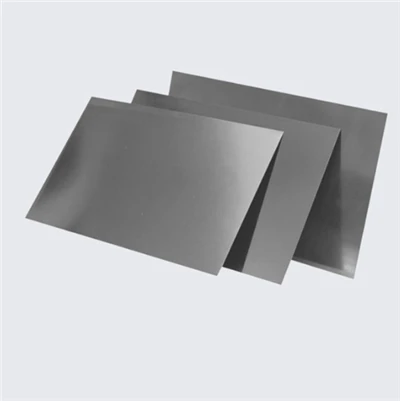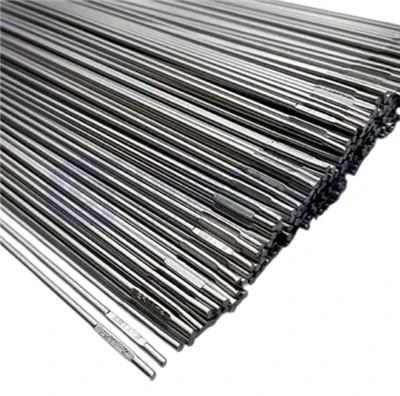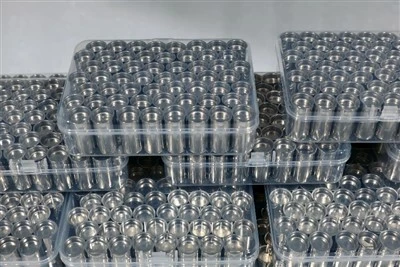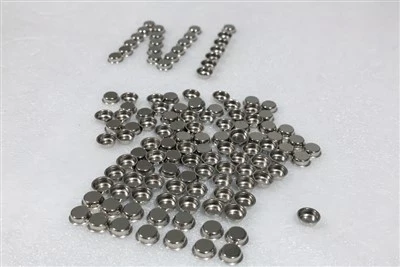
types of Chromium Target
I. Core Material Properties (Material Core Properties)
1. Purity and Impurity Control
High purity standard: The purity of industrial-grade chromium tube targets is typically 99.5% (Cr99.5) to 99.995% (Cr99.995), while for high-end electronic fields (such as semiconductor coating), it needs to reach 99.999% (5N) or above. The content of impurity elements (iron, silicon, aluminum, oxygen, carbon) is strictly controlled within 10-100 ppm (refer to ASTM F1367, YS/T 1220 standards).
Impurity influence: Low purity (such as Cr99.0 or below) chromium tube targets are prone to pinholes and defects in the coating layer due to impurity precipitation; excessive oxygen content (>500 ppm) will increase the brittleness of the target material, and during sputtering, it is prone to "target poisoning", affecting the uniformity of the coating.
2. Crystal Structure and Density
Crystal form: Pure chromium has a body-centered cubic (BCC) crystal structure, which is stable at room temperature and has no isomorphism transformation. Therefore, chromium tube targets are not prone to internal stress due to phase change during processing and sputtering.
Density requirement: The theoretical density is 7.19g/cm³, and the relative density of the chromium tube target after sintering and forming should be ≥98% (for high-end applications, ≥99%), with a density uniformity deviation of ≤±0.5%. Low-density target materials have pores, and during sputtering, they are prone to "particle splashing", resulting in particle contamination on the coating surface.
II. Physical and Mechanical Properties (Physical & Mechanical Properties)
1. Mechanical Properties
Hardness: The Vickers hardness (HV) of annealed chromium tube targets is approximately 160-200, and after cold processing, the hardness can be increased to HV 250-300. The higher hardness makes it less prone to deformation during installation and sputtering, but it also increases the processing difficulty (special cutting tools are required).
Brittleness and toughness: Chromium is a typical brittle metal, with low impact toughness at room temperature (≤10J/cm²), and more obvious brittleness at low temperatures (<-50℃). Therefore, chromium tube targets need to avoid severe collisions during transportation and installation to prevent cracking; adding a small amount of titanium or zirconium (0.1%-0.3%) can improve toughness, but it requires balancing purity and mechanical properties.
2. Thermal and Electrical Properties
Thermal conductivity: At room temperature, the thermal conductivity is approximately 93.7W/(m・K), lower than copper (401W/(m・K)) and aluminum (237W/(m・K)). During sputtering, the power density should be controlled (usually ≤5W/cm²) to avoid local overheating that causes target deformation or cracking.
Resistivity: At room temperature, the resistivity is approximately 12.9μΩ・cm, belonging to a medium-resistance metal. During sputtering, a suitable power supply (mainly DC Magnetron Sputtering for direct sputtering, RF for high-frequency sputtering suitable for insulating coating composite targets) should be matched.
III. Sputtering Performance Characteristics (Sputtering Performance)
1. Sputtering Efficiency and Deposition Rate
Sputtering yield: Under argon (Ar) atmosphere, sputtering voltage 500-800V, and pressure 0.5-2Pa conditions, the sputtering yield of chromium is approximately 0.6-0.8 atoms/ion (lower than that of aluminum 1.2 atoms/ion), and the deposition rate is usually 50-150nm/min (depending on the power density), suitable for the preparation of medium-thick films (such as 100-500nm decorative films, functional films). Directionality: After chromium atom sputtering, the directionality is relatively strong. It is necessary to optimize the distance between the target and the substrate (usually 8-15 cm), and adjust the magnetic field distribution (using non-equilibrium magnetron sputtering) to ensure the uniformity of the coating (thickness deviation ≤ ±5%).
2. Characteristics of the Coating Layer
Adhesion: The adhesion of the chromium film to the substrate (glass, metal, plastic) is excellent. It can achieve an adhesion force of 50N or more (using the scratch test method) without the need for a transition layer, thus often being used as an "underlayer" to enhance the adhesion of subsequent metals (such as nickel, copper) or ceramic coatings.
Optical and Corrosion Resistance: The chromium film appears silver-gray, with a reflectivity of approximately 70%-80% (in the visible light band). It can be used for decorative coatings; at the same time, the surface of the chromium film can easily form a dense oxide film (Cr₂O₃), with a neutral salt spray corrosion resistance time of ≥ 200 hours (5% NaCl solution, 35°C), suitable for corrosion-resistant coating scenarios.
IV. Structure and Application Adaptability (Structure & Application Adaptability)
1. Typical Structural Parameters
Shape and Specification: Common outer diameters range from 100 to 300 mm, lengths from 300 to 1500 mm, and wall thicknesses from 5 to 20 mm. The inner walls are usually designed to be smooth or with positioning grooves, suitable for the rotating target holder of magnetron sputtering equipment; both ends need to be machined with threads or flanges to facilitate sealing and connection with cooling water channels.
Surface Treatment: The sputtering surface of the target material needs to undergo precise polishing (surface roughness Ra ≤ 0.8 μm) to reduce the generation of particles during sputtering; the non-sputtered surface (inner walls, end faces) needs to be treated for corrosion prevention (such as passivation, coating with high-temperature-resistant coatings), to prevent cooling water contamination.
2. Application Scenario Adaptability
Decoration and Functional Coating: Low purity (Cr99.5) chromium tube targets are used for decorative chrome coating on hardware and bathroom products; high purity (Cr99.995) is used for PVD coating on mobile phone casings and automotive interiors, requiring both aesthetics and wear resistance.
Electronic and Optical Fields: 5N grade high-purity chromium tube targets are used for the conductive interconnection layer of semiconductor chips (Cr as a barrier layer to prevent copper diffusion), and for anti-reflection/reflective films on optical lenses, requiring strict control of impurity content (especially alkali metals, heavy metals), to avoid affecting device performance.
Special Fields: By doping silicon (Si) and carbon (C) into chromium alloy tube targets, a CrSiC composite film can be prepared, used for high-temperature wear-resistant coatings (such as molds, engine components), expanding the application range of chromium target materials.
CONTACT US
Position: Manager(Monica)
TEL/WA: +86 18292702722
E-mail:Cr-Re@titanmsgp.com