In the field of non-ferrous metal materials, niobium and its alloys are widely used in aerospace, superconducting technology, chemical equipment, and electronics industries due to their excellent corrosion resistance, high melting point, and good processing properties. Among them, Nb1 and Nb2 are two common grades of industrial pure niobium. Although they are both niobium materials, they have significant differences in chemical composition, mechanical properties, and applicable scenarios. Accurately understanding these differences is the key to project material selection and cost control.
The core difference between Nb1 and Nb2 is the purity control level. According to national standards (such as GB/T 3630-2017 "Niobium and Niobium Alloy Plate, Strip and Foil"), Nb1 is defined as high-purity grade niobium, with a niobium content (mass fraction) of not less than 99.95%, while Nb2 is common pure grade niobium with a niobium content of not less than 99.9%.
Further comparison of impurity element restrictions:
- Key impurity elements: Nb1 has stricter requirements for interstitial elements such as oxygen, nitrogen, and carbon. For example, the oxygen content in Nb1 is ≤0.02%, while Nb2 can be relaxed to ≤0.05%; in terms of nitrogen content, Nb1≤0.01%, Nb2≤0.02%; in terms of carbon content, Nb1≤0.01%, Nb2≤0.02%.
- Metal Impurities: Nb1 also has lower individual limits for metal impurities such as tantalum, iron, tungsten, and titanium. The total impurity content is usually controlled within 0.05%, while Nb2 allows total impurities to reach 0.10%~0.15%.
This difference is directly due to the difference in the melting process: Nb1 mostly uses electron beam melting or vacuum plasma melting, which can effectively remove volatile impurities; Nb2 often uses vacuum consumable arc melting, which is lower cost but less pure. In addition, Nb1 usually uses more than two electron beam refining, while Nb2 only needs a single melting, and the production cycle and energy consumption are significantly different.
Differences in purity are further transmitted to the physical and mechanical properties of the material:
- Hardness and Strength: Due to the solid solution strengthening effect of interstitial elements (oxygen, nitrogen), the room temperature tensile strength of Nb2 is usually higher than that of Nb1. Typical data shows that the tensile strength of annealed Nb1 is 140~200 MPa and the elongation is ≥30%; while the tensile strength of Nb2 can reach 180~240 MPa, but the elongation drops slightly to more than 25%. In short, Nb2 has higher hardness, and Nb1 has better plasticity. In terms of Vickers hardness, Nb1 is about 65 HV and Nb2 is about 80 HV.
- Low temperature performance: In ultra-low temperature environments (such as liquid helium temperature 4.2 K), Nb1 has less impurities and high lattice integrity, exhibits more stable ductility and maintains low thermal conductivity, and is the preferred material for superconducting cavities; while impurities in Nb2 may become sources of crack initiation, and the brittle transition temperature is slightly higher (about -30°C, Nb1 can reach below -50°C).
- Recrystallization Behavior: Nb1 has a higher recrystallization starting temperature (about 1050℃) than Nb2 (about 980℃), which means that Nb1 can maintain a finer grain structure during high-temperature processing and is suitable for products with a wider heat treatment process window.
In corrosive environments (such as hot concentrated hydrochloric acid, sulfuric acid, or strongly alkaline media), both materials perform well, but there are subtle differences due to the integrity of the surface oxide film:
- Nb1: Extremely high purity brings a denser and more uniform passivation film (the main component is Nb₂O₅), which is more resistant to pitting corrosion in harsh chemical media. It is especially suitable for semiconductor-grade chemical production equipment and high-purity acid delivery pipelines.
- Nb2: Corrosion resistance is sufficient in conventional industrial environments, but when used in fluorine-containing or strongly oxidizing media for a long time, impurities may induce local corrosion to occur preferentially. For example, the tendency of intergranular corrosion caused by the segregation of impurities at grain boundaries is slightly higher than that of Nb1.
In terms of processing, Nb2 is more suitable for mechanical cutting - its slightly higher hardness is conducive to obtaining a smooth surface, and the chips are easy to break; while Nb1 has outstanding advantages in precision processing, such as deep drawing and micro-forming. Because of its good plasticity and few internal impurities and defects, it is not easy to produce processing cracks, and is suitable for making thin-walled tubes, foils, and complex, special-shaped parts.
Based on the above differences, a clear division of application labor has been formed in the industry:
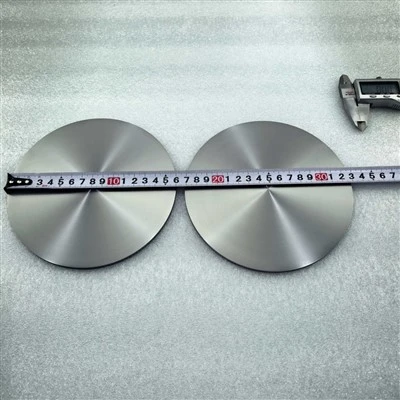
- Nb1 key applications: radio frequency superconducting acceleration chambers (such as particle accelerators), high-performance high-temperature alloy additives (requiring extremely low oxygen content, such as nickel-based single crystal superalloys), sputtering targets (thin films requiring high uniformity and purity), medical implants (excellent biocompatibility and non-toxicity, such as bone nails and vascular stents).
- Typical uses of Nb2: Chemical reactor linings, heat exchanger tube bundles, fasteners, niobium hangers for anodizing, general electrical and electronic structural parts, optical coating evaporation boats, and cost-sensitive large-size niobium products (such as crucibles, containers).
Simple rules for selection: If the service environment involves ultra-low temperature, strong corrosion, or ultra-high vacuum, and performance redundancy is the primary consideration, choose Nb1; if the working conditions are conventional chemical media, room temperature to medium temperature range (<800°C), and cost-effectiveness is a priority, then Nb2 is fully qualified. Special reminder: In the field of superconducting applications, the residual resistance ratio (RRR) of Nb1 is usually required to be ≥200, while the RRR of Nb2 is only about 50~80, and cannot be mixed.
Conclusion
The essential difference between Nb1 and Nb2 stems from the purity level, which derives from the gradient distribution of mechanical, corrosion resistance, and processing properties. Understanding this logic can not only avoid cost waste caused by "over-design" (the price difference between the two can usually reach 30% to 50%), but also prevent the risk of failure caused by "insufficient selection". As a non-ferrous metals research institution, it is recommended that users clarify service parameters and life requirements at the early stage of the project, and use third-party testing (such as oxygen content analysis, room temperature stretching, grain size assessment) to verify the compliance of material batches - this is where the closed loop of scientific material selection lies.
lisa
Sales Manager
Phone Number/weChat/whatsApp
(82)-18291772322
Ta-Nb@titanmsgp.com